

Vietnam offers international furniture buyers a broad manufacturing base, but distance can turn small sourcing gaps into expensive delays. A sample may look right while the production run uses a different finish, packaging may fail during transit, or export documents may contain details that hold up a shipment. A local sourcing agent helps keep factories, buyers, and logistics providers working from the same specifications. That coordination saves time while reducing the risk of quality problems reaching the customer.
Where sourcing delays usually begin
Delays often start before production, and an incomplete product brief can leave a factory guessing about dimensions, timber species, hardware or finish. Buyers may also contact several manufacturers that appear similar online but have very different equipment, capacity and export experience.
Vietnam’s furniture industry includes producers serving many markets, as reflected in official reporting on Vietnam’s furniture exports. That range creates choice, but it also makes careful screening necessary. A capable agent can compare factories against the actual project, confirm realistic lead times, and identify minimum order quantities before sampling begins. This early work prevents weeks of discussion with a supplier that can’t meet the brief.
When local sourcing support makes sense
Local help becomes especially useful when you’re developing a custom collection, working with several factories or placing an order large enough that rework would be costly. It can also help a small buying team that lacks the time to manage daily factory communication across time zones.
A furniture sourcing agent can support international buyers with factory identification, compliance vetting, sampling, quality control and export logistics. For example, an agent might review three suitable manufacturers, arrange comparable samples and document the differences in price, finish quality and production capacity. You still control the final decision, but you receive organized information that makes the choice faster and easier to defend.
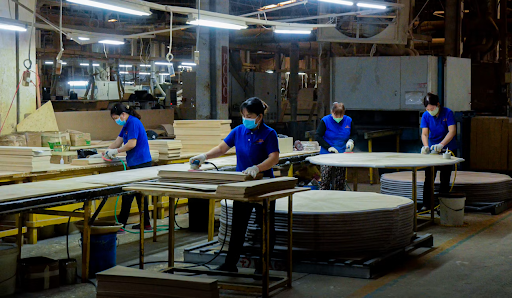
Turn product ideas into measurable specifications
Quality problems become harder to dispute when instructions rely on broad terms such as “warm oak,” “durable finish” or “export packaging.” Replace those descriptions with measurable requirements. Record dimensions and tolerances, approved materials, moisture expectations, hardware codes, finish references and packaging tests in one specification sheet.
The approved sample should become the physical benchmark for production. Photograph it from multiple angles, label the finish and keep a signed record of any changes. If a dining chair’s seat height changes by 10 millimeters after sampling, update the drawing before production starts. This level of version control protects both buyer and factory because everyone can trace which specification was approved and when.
Build quality checks into production
A final inspection alone may reveal a problem too late to fix without missing the shipping date. A better inspection plan includes checkpoints tied to production milestones. Raw materials can be reviewed before assembly, early units can be checked for dimensions and finishing can be assessed before the full batch is packed.
Inspection reports should include order numbers, sample sizes, photos, measurements and a clear list of defects. Separate critical issues from cosmetic ones so the factory knows what requires immediate correction. If drawer runners are misaligned in the first 20 cabinets, production can pause while the setup is adjusted. Catching that issue after 500 cabinets are packed creates a far larger schedule and cost problem.
Keep logistics decisions connected to the order
Furniture takes up considerable container space, so packaging and loading plans affect both product condition and landed cost. Confirm carton dimensions, protection materials, labeling, and container quantities before approving mass production. A small increase in carton size across hundreds of units can change how many pieces fit into a shipment.
Responsibilities should also be clear under the selected Incoterms rules. Record who arranges inland transport, export clearance, freight and insurance. Ask for a document checklist covering the commercial invoice, packing list and any product-specific records required by the destination market. Early coordination gives the factory and freight provider time to correct inconsistencies before cargo reaches the port.
Use a repeatable sourcing dashboard
Keep each order’s main details in one shared tracker: sample status, approvals, deposit date, production milestones, inspection findings and shipping documents. Assign one owner to every open task and include a due date. This prevents an important request from disappearing inside a long email thread.
The same system should capture what you learn after delivery. Record packaging damage, assembly complaints, finish variation, and actual lead times, then use those findings when planning the next order. The practical ideas in this guide to saving time and money through better planning can help you structure that process.
Before placing the next purchase order, confirm that the approved sample, current specification sheet, inspection schedule, and shipping responsibilities all match. Four aligned records can prevent the small misunderstandings that cause the most expensive furniture sourcing setbacks.





























Share in the comments below: Questions go here

Work is only one part of a fulfilling life. Find inspiration to prioritize your well-being, nurture relationships, and enjoy more of what matters beyond the job.