
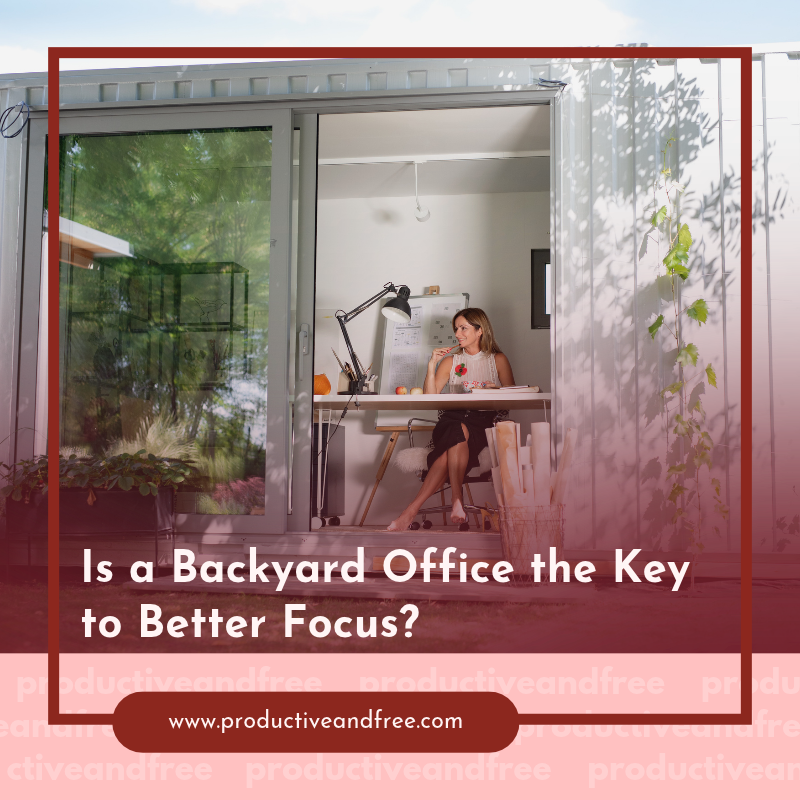
A backyard office creates a clear boundary between home life and focused work without adding a commute. That separation can reduce household interruptions, support a consistent routine and free up indoor living space. Still, a detached workspace only improves productivity when its location, construction and daily setup suit the way you work. Before ordering a structure or drawing a floor plan, consider both the psychological benefits and the practical work needed to make the space comfortable year-round.
The Psychology of Leaving the House
Walking from your back door to a separate office gives your brain a useful transition cue. That short trip can signal the beginning of the workday, much like a traditional commute, while the return walk helps you mentally switch off afterward.
Physical separation also adds friction to common distractions. Laundry, television and household chores are less visible, while family members can more easily recognize when you're working. Reviewing backyard office ideas may help you picture how windows, storage and room layout influence that sense of separation. A dedicated office works best when it feels distinct from both your house and recreational yard space.
Siting and Foundation Requirements
Choose the site only after checking access, drainage, sunlight and local building rules. A low point in the yard may collect water, while a position with full afternoon sun can become uncomfortably warm. Also measure the route that materials and equipment would need to take from the street.
The foundation depends on the structure's size, soil and expected use. Options may include a concrete slab, piers or a compacted gravel base. If the ground requires clearing, grading or drainage improvements, experienced Excavation Contractors can prepare the area before foundation work begins. Correct preparation helps prevent standing water, uneven floors and doors that stop closing properly as the ground settles.

Working with Excavation Contractors
Give contractors clear information about the proposed office dimensions, foundation type and access route. Mark known utility lines and discuss where displaced soil should go. Photos taken after heavy rain can reveal drainage patterns that may not be obvious during a dry site visit.
Ask how the crew will protect lawns, fences and nearby trees while moving equipment. You should also confirm the final grade, cleanup responsibilities and project schedule in writing. If your yard has a narrow gate or steep slope, mention it during the first conversation. Early disclosure allows the contractor to plan suitable equipment and reduces the chance of delays once work starts.
Ergonomics and Tech Infrastructure
Plan the interior around a full workday, not an occasional hour with a laptop. Your desk should provide enough depth for the monitor to sit roughly an arm's length away, while an adjustable chair should support a comfortable posture. Position the screen to limit window glare without blocking natural light.
Electric service, heating, cooling and internet access require decisions before walls are finished. A guide to using a shed as an office can help identify practical needs such as insulation and ventilation. Install more outlets than your current setup requires, including one near the door for cleaning equipment. Wired internet may also offer more reliable video calls than a distant Wi-Fi signal.
Measuring the Focus Dividend
Track results for four weeks after moving into the office. Record when you start work, how many focused sessions you complete and how often interruptions pull you away. Compare those figures with a typical month spent working inside the house.
Output matters more than time at the desk. A writer might track completed drafts, while a consultant could compare billable hours or proposal turnaround times, which are all productivity tips for working from home. Also watch for less obvious changes, such as ending work on schedule and using fewer evenings to catch up. If results remain flat, adjust one variable at a time. Better lighting, a closed notification schedule or a warmer room may solve the issue without changing the structure.
A backyard office earns its space when the walk across the yard reliably marks the start and finish of focused work. Let the first month provide the evidence, then fine-tune the room based on what your workdays actually require.


























Share in the comments below: Questions go here

Discover how a backyard office can enhance your focus and productivity. Explore design tips and benefits for creating your ideal workspace at home.