
How Advanced Motorist Training Improves Reaction Time and Road Safety
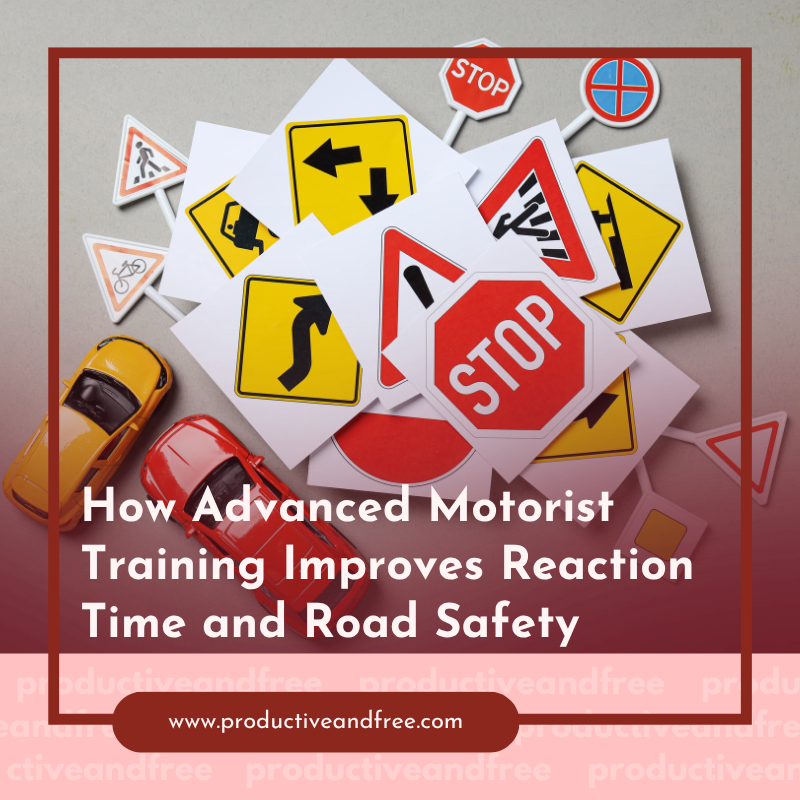
Reaction time often feels like a fixed trait, something you either have or you do not. In reality, it behaves much more like a skill built from specific, trainable components. Advanced motorist training is designed to strengthen each of those components individually, helping drivers notice hazards sooner, process information more effectively, and respond with greater confidence under pressure rather than simply relying on years of routine driving experience.
Understanding how these individual stages work explains why structured training can produce meaningful improvements in both reaction time and overall road safety. It is not simply about reacting faster. It is about recognizing developing hazards earlier and making better decisions before a situation becomes an emergency.
The Three-Stage Process Behind Every Reaction
Every driving reaction moves through three distinct stages, whether the driver is aware of it or not. Together, these stages determine how quickly and effectively a driver responds to changing road conditions.
● Detection: Noticing that something in the driving environment has changed, such as a vehicle braking suddenly or a pedestrian stepping toward the road.
● Recognition: Interpreting what that change means and deciding how urgent the situation is.
● Response: Carrying out the appropriate action, whether that involves braking, steering, or a combination of both.
A slow overall reaction time can result from delays at any one of these stages. Some drivers notice hazards quickly but hesitate before deciding how to respond, while others recognize the danger immediately but struggle to execute the correct maneuver smoothly. Advanced motorist training is designed to strengthen each stage individually, helping drivers react earlier, make better decisions, and maintain greater control in unexpected situations.
Why Detection Improves With the Right Kind of Practice
Detection depends heavily on where a driver's eyes are actually looking and how efficiently they scan the road. Untrained drivers tend to fixate narrowly, often on the vehicle directly ahead, missing developing hazards at the edges of their vision. Trained drivers scan more broadly and more efficiently, picking up early cues, a brake light flickering several cars ahead, a pedestrian's posture shifting toward the curb, before those cues become urgent.
This is not an innate talent. It is a scanning pattern that improves measurably with the right kind of structured practice, particularly practice that actively engages a driver in searching for hazards rather than passively watching them unfold.
Why Recognition Speeds Up With Exposure to Real Scenarios
Recognition is where experience and training diverge most sharply from natural instinct. A driver who has never encountered a specific hazard, a vehicle hydroplaning, a sudden loss of traction mid-corner, has no fast mental template for what is happening, which delays the moment recognition actually occurs.
Advanced training compresses years of rare, high-stakes scenarios into a controlled environment where a driver can encounter them safely and repeatedly. This is exactly the value of a genuine high performance driver training program, since practicing controlled skids, emergency lane changes, and braking at the actual limits of a vehicle's grip builds the fast recognition templates that years of ordinary commuting rarely provide on their own.
Road America's driving schools structure exactly this kind of scenario-based practice into their curriculum, giving drivers repeated, controlled exposure to situations most people only ever encounter once, unexpectedly, on a public road.
The Research Behind Why This Kind of Training Works
This is not just a matter of confidence or seat time. A 2024 systematic review and meta-analysis published in Accident Analysis & Prevention, found that hazard perception training produced a large, statistically significant effect on drivers specifically. It also found that training methods actively engaging participants in the task produced more consistent improvements than passive instruction alone. The review also found preliminary evidence that even a single, well-structured training session can meaningfully improve hazard perception skill.
That finding matters directly for anyone weighing whether structured training is worth the time and cost. The research suggests the benefit is not marginal, and that active, hands-on training methods, rather than lectures or passive video review, are what actually drive the improvement.
Why Response Execution Still Needs Physical Practice
Even a driver who detects and recognizes a hazard instantly can still respond poorly if the physical execution, the actual steering input or brake pressure, has never been practiced under real conditions. This final stage is why simulator or classroom training alone tends to fall short of genuine behind-the-wheel practice at real speeds.
Learning what a vehicle's tires actually feel like approaching the edge of grip, and how much steering correction that moment genuinely requires, is something a driver's body needs to experience directly rather than simply understand intellectually.
Putting the Three Stages Together to Build Faster Reactions
Advanced motorist training is most effective because it develops detection, recognition, and response as a single process rather than as separate skills. Each stage supports the next, helping drivers react more quickly and with greater control when unexpected situations arise.
Key benefits of this integrated approach include:
● Earlier hazard detection: Drivers learn to identify developing risks before they become emergencies.
● Quicker decision-making: Regular practice reduces hesitation when assessing changing road conditions.
● More controlled responses: Braking and steering inputs become smoother and more precise under pressure.
● Greater confidence: Repeated exposure to realistic driving scenarios helps replace uncertainty with familiarity.
By practicing all three stages together in realistic, controlled environments, drivers develop reactions that become faster and more natural over time. Rather than relying solely on years of driving experience, advanced training helps build habits that improve both confidence and road safety.
Final Thoughts
Reaction time is not a single fixed trait but three separate, trainable stages: detection, recognition, and response. Each improves through different kinds of deliberate practice. Advanced motorist training works because it develops all three simultaneously, using controlled, repeatable scenarios to build the mental awareness and physical responses that everyday driving rarely provides.
Rather than relying on experience alone, structured training gives drivers opportunities to practice recognizing hazards, making quick decisions, and responding with greater confidence in a safe environment. For drivers who want to become both faster and safer behind the wheel, understanding this process is the first step toward choosing training that develops these essential skills.



























Share in the comments below: Questions go here

Is your marketing data at risk? Delve into the silent threats that could undermine your efforts and find out how to protect your critical information.