
What Pest Control Experts Notice About Ant Infestations That Most Homeowners Miss
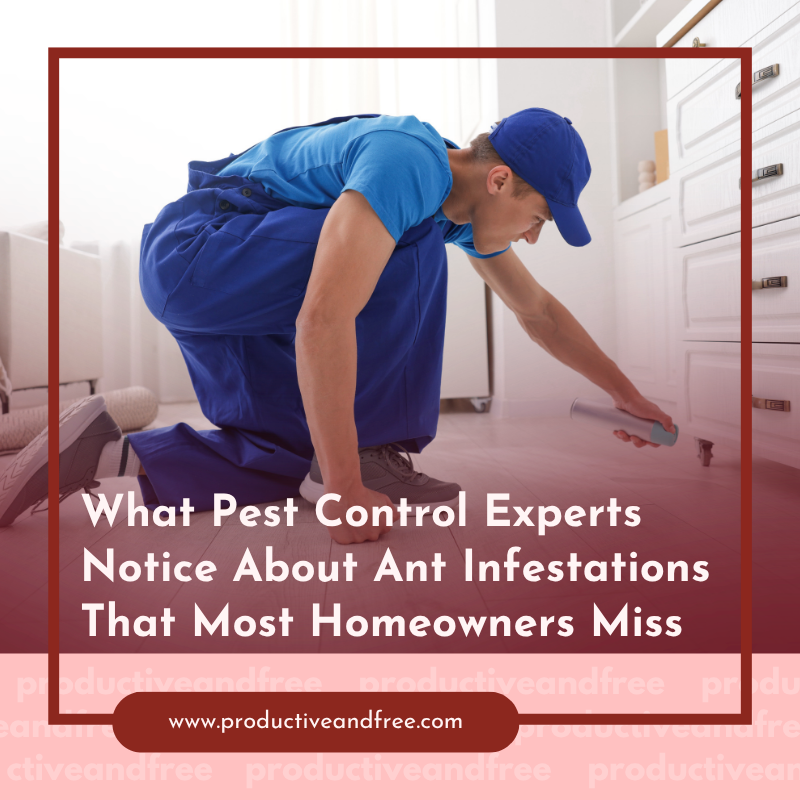
Running a small business or managing a household budget both come down to the same skill: catching small problems before they turn into expensive ones. Readers of this site are used to thinking in terms of systems, efficiency, and protecting what they have built, whether that is an email list, a product line, or a home office. Ant infestations fit into that same mindset. They start small, quietly, and by the time most homeowners notice a problem, a pest control technician walking through the same space would have already spotted a dozen warning signs along the way.
That gap between what a trained eye catches and what a busy homeowner overlooks is not a matter of intelligence. It is a matter of pattern recognition built from seeing hundreds of infestations at every stage. Pros are not guessing when they check a windowsill or tap on a baseboard. They are reading a set of signals that most people never learn to look for, because nobody ever taught them what those signals mean.
What Pest Control Pros See That Homeowners Miss: The Hidden Signs of Ant Activity
A technician walking into a home rarely starts by looking for ants themselves. Instead, they look for the conditions that support colonies: standing moisture near plumbing, gaps around window frames, mulch piled against a foundation, or crumbs collecting in spots that seem too minor to matter. These small environmental clues tell a professional far more than a single ant crossing the kitchen floor ever could. Homeowners tend to treat an ant sighting as the problem itself, when in reality it is usually just the most visible symptom of a much larger, mostly hidden colony structure.
Another thing pros notice quickly is the difference between a random forager and an established trail. A lone ant might mean nothing. A steady line moving along a consistent path, especially one that leads toward a water source, is a much stronger indicator of an active nest nearby. This is especially true in bathrooms, where a search for ants in bathroom sink areas often reveals a moisture problem that has been quietly building for weeks. Homeowners tend to wipe the ants away and move on, not realizing the trail will simply reform within a day or two because the underlying draw, water and warmth, has not been addressed.
Early Warning Signals: Pheromone Trails, Moisture Patterns, and Structural Clues
Ants communicate through pheromone trails that are invisible to the human eye but persistent enough to guide entire colonies along the same route for weeks. Professionals know that simply cleaning a visible trail with soap and water only offers temporary relief, because the chemical markers embedded in tiny surface grooves can linger longer than a quick wipe-down suggests. This is one of the most common misses among homeowners, who assume a clean countertop means the problem is solved when the colony has simply rerouted through a slightly different path.
Moisture patterns tell a similar story. Water-damaged wood, condensation around pipes, and even minor leaks under sinks create ideal breeding conditions for several ant species, particularly the ones drawn to bathrooms and kitchens. Seasonal timing matters here as well. According to SDSU Extension, ant colonies become active early in spring, and high populations from the previous year often carry over into the current season because mild winters and wet growing conditions boost colony survival and reproduction. That means a minor ant issue ignored in the fall can easily reappear as a much larger problem the following spring, catching homeowners off guard who assumed the cold months had solved things on their own.
Species-Specific Red Flags: Carpenter Ants, Odorous House Ants, and Bathroom Invaders
Not all ants pose the same level of risk, and this is where professional experience really separates itself from general homeowner knowledge. Odorous house ants, which give off a distinct smell when crushed, account for a large share of treated infestations and are frequently found nesting near sinks and moisture-heavy areas. Carpenter ants are a different story entirely. These ants tunnel through wood to build nests, and the structural damage they cause can rival what termites produce over time, even though homeowners rarely associate ants with the kind of destruction typically reserved for termite warnings.
Pest professionals are trained to distinguish between species almost immediately, based on size, color, nesting behavior, and the type of debris left behind, such as the fine wood shavings carpenter ants push out of their tunnels. Homeowners, by contrast, often lump every ant into one general category and apply the same over-the-counter spray regardless of species. This mismatch between treatment and actual threat is one of the most common and costly mistakes seen in the field, since a product built for surface ants does little against a colony tunneling quietly inside a wall.
| Odorous house ant infestations treated (2024) | 64% of cases |
| 2026 ant population trend | High carryover from 2025 due to mild winters |
| Carpenter ant vs termite damage potential | Comparable structural damage risk |
| Average pest control cost, 3,000 sq ft home | $400 to $950 |
| Homeowners concerned about ants (2024 survey) | Over 80% across generations |
When to Call a Professional: Why DIY Methods Fail and What Experts Can Accomplish
Most DIY ant treatments fail for the same reason: they address the visible trail rather than the colony structure feeding it. Store-bought sprays kill the ants in sight but rarely reach the queen or satellite nests hidden inside walls, under slabs, or beneath landscaping. Professionals use targeted baiting strategies designed to be carried back into the colony, along with inspection techniques that identify entry points homeowners typically overlook, such as utility line gaps or foundation cracks that seem too small to matter.Given that over 80% of homeowners across generations report real concern about ants in and around their homes, the appetite for a lasting solution is clearly there, even if the tools to achieve it are not always well understood. A professional inspection typically costs far less than the frustration and repeated purchases involved in months of ineffective DIY attempts, and it comes with the added benefit of catching structural risks, like carpenter ant damage, before they become expensive repairs. For anyone noticing a return of ants after supposedly solving the problem last season, that is usually the clearest sign that it is time to bring in someone trained to see what the trail is really telling them.



























Share in the comments below: Questions go here

Maximize productivity by streamlining your field operations. Explore effective solutions that drive efficiency and elevate your team's performance!