
How AI Is Helping Small Businesses Scale Sales More Efficiently
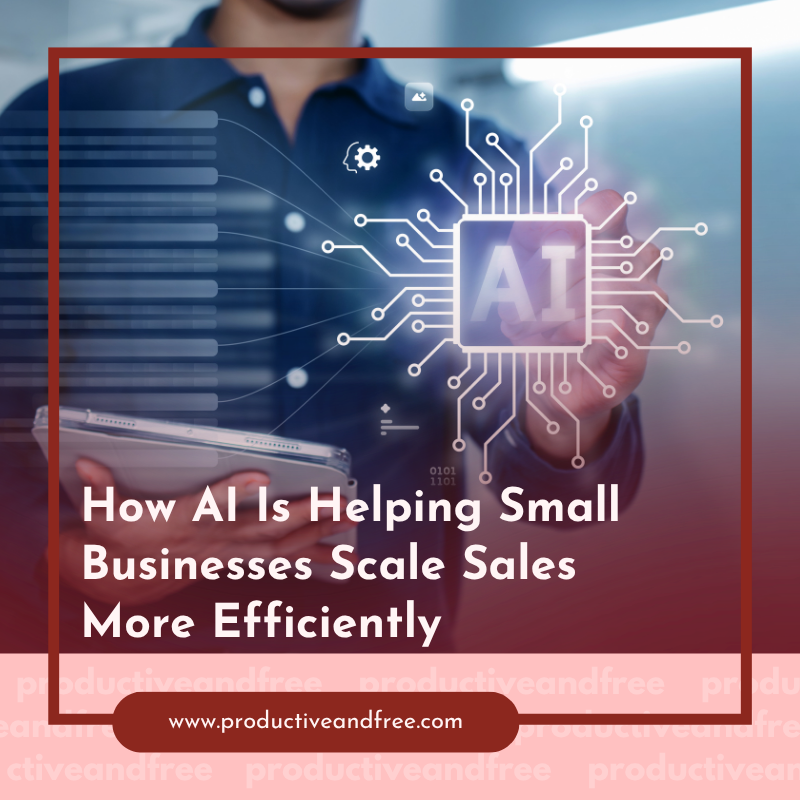
For many small business owners, sales growth feels like a constant balancing act. You need to find new customers, nurture relationships, and close deals, all while managing every other aspect of the business. Scaling these efforts often seems impossible without a massive budget or a large sales team. This is where artificial intelligence (AI) steps in, transforming sales from a manual grind into an automated, intelligent process that drives real growth.
Why Small Businesses Need Sales Automation
Time is one of the most valuable resources for a small business. Every hour spent on repetitive administrative tasks is an hour taken away from strategic priorities like building customer relationships or developing new products. Sales automation helps reduce the time-consuming work involved in the sales cycle, from sending follow-up emails and logging CRM interactions to scheduling meetings.
By automating these tasks, you free up your team to focus on what humans do best: connecting with people. Instead of getting bogged down in data entry, they can dedicate more time to understanding customer needs and closing complex deals. This shift not only improves efficiency but also boosts morale, as team members can concentrate on more meaningful, high-impact work.
AI's Role in Lead Management
Traditional automation follows set rules, but AI adds a layer of intelligence that revolutionizes lead management. AI tools can analyze incoming leads from various channels, like your website, social media, and email campaigns, and instantly qualify them based on predefined criteria. This means your sales team only engages with prospects who are genuinely interested and a good fit for your product or service.
Furthermore, advanced systems can handle the initial outreach and nurturing process. An AI-powered tool can engage leads in natural-sounding conversations via email or chat, answering initial questions and gathering information 24/7. A solution like the Closora enterprise-grade AI Sales Closer can autonomously manage these early interactions, ensuring no potential customer is left waiting. Understanding AI's impact on sales automation is key to seeing how it moves beyond simple task execution to intelligent lead engagement. Your team steps in only when the lead is warm and ready for a meaningful conversation.

Handling Objections with AI Precision
One of the most challenging parts of any sale is overcoming objections. AI can provide powerful support in this area by analyzing thousands of past sales conversations to identify common objections and the most effective responses. When a salesperson encounters an objection during a call or email exchange, an AI assistant can provide real-time suggestions and talking points.
This doesn't mean reciting a robotic script. Instead, the AI provides data-backed insights that help the salesperson tailor their response to the specific customer's concerns. For example, if a prospect mentions budget constraints, the AI could suggest a specific case study that demonstrates a high return on investment or bring up a flexible payment option that has worked for similar clients in the past. This empowers your team with the collective knowledge of every sale your company has ever made.
Streamlining Agreement and Payment
Once a customer agrees to a purchase, the administrative work isn't over. Creating proposals, sending contracts, and chasing payments can create bottlenecks that slow down revenue collection. AI helps streamline this final stage of the sales process. It can automatically generate personalized quotes and agreements by pulling customer data directly from your CRM.
After the agreement is sent, AI-powered systems can track its status and send automated reminders to ensure it gets signed promptly. The same applies to invoicing and payments. AI can automate the entire accounts receivable process, from sending initial invoices to following up on late payments. This not only saves significant administrative time but also improves cash flow by reducing the average time it takes to get paid.
Measuring AI's Impact on Revenue
Implementing new technology is only worthwhile if you can measure its effect on the bottom line. AI excels at providing deep, actionable insights into your sales performance. AI-driven analytics platforms can process vast amounts of data to reveal trends that would be impossible for a human to spot.
These tools can create detailed reports and dashboards that show you:
● Which lead sources generate the most revenue
● The average time it takes to close a deal
● Where prospects are dropping out of your sales funnel
● Accurate revenue forecasts based on current pipeline activity
This level of analysis is fundamental to AI for small business growth because it allows you to make data-driven decisions. You can double down on strategies that work, fix leaks in your sales process, and allocate your resources more effectively to maximize revenue.
Adopting AI in your sales process isn't about replacing your team; it's about empowering them. By automating repetitive work and providing intelligent insights, you give your team the tools they need to sell smarter, build better relationships, and drive sustainable growth for your business.






















Share in the comments below: Questions go here

Learn why integrating a smooth online store is crucial for boosting your email list growth. Transform your business strategy and engage customers like never before!