
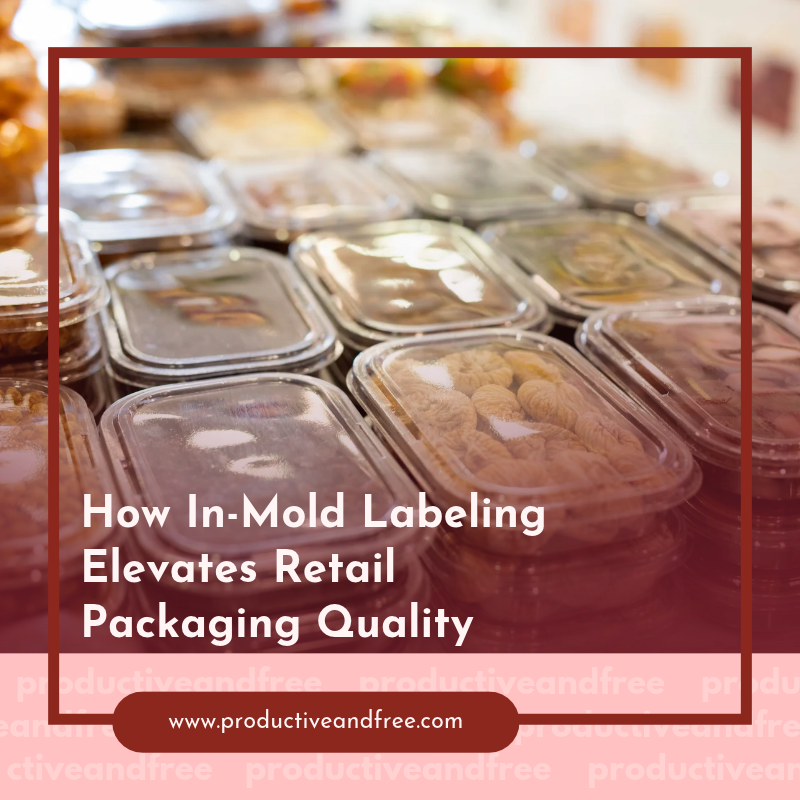
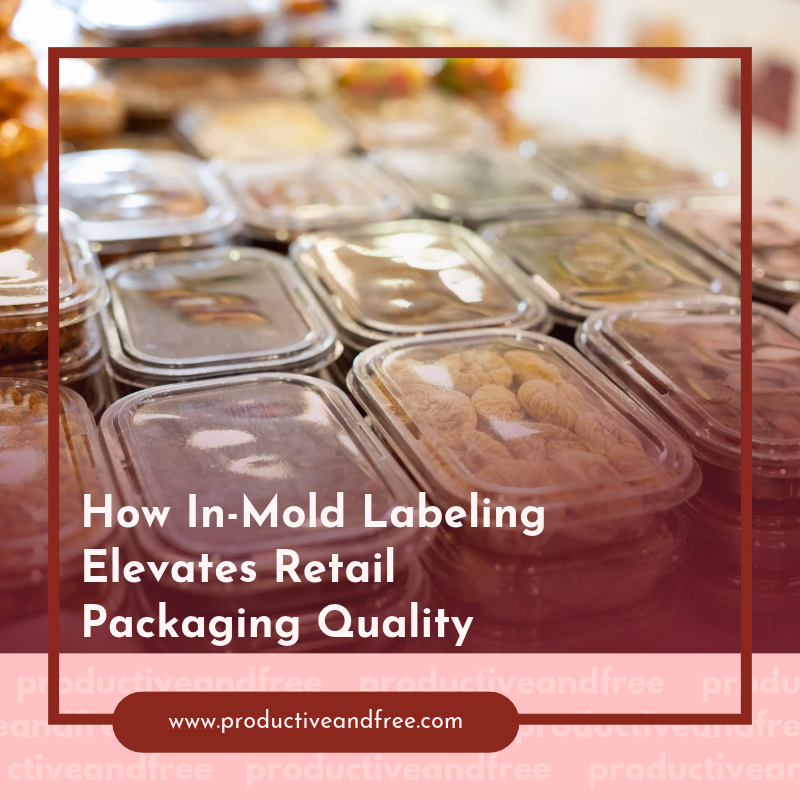
Retail packaging must protect a product, communicate its value and maintain a consistent appearance through shipping and handling. In-mold labeling (IML) supports all three goals by placing a printed label inside a mold before plastic enters it. The label bonds with the molded part during production, creating a unified surface instead of a separate decoration added later.
For manufacturers, its value comes from combining molding and decoration in one controlled production cycle.
The Limits of Adhesive Labels
Pressure-sensitive labels remain practical for short runs and products that need frequent design changes. However, they introduce extra production steps, including surface preparation, label application and inspection. A label placed slightly off center can make an otherwise functional container look defective. Bubbles, wrinkles and exposed edges may also appear when application settings vary.
Retail conditions create further challenges. Condensation on a refrigerated container can weaken some adhesives, while repeated handling may lift corners or scuff printed surfaces. Manufacturers evaluating label options should test finished packages under realistic conditions. That means checking samples after cold storage, exposure to humidity, stacking and repeated opening. The lowest label price may not produce the lowest total cost once labor, rejected parts and application downtime enter the calculation.
Seamless Graphics Through IML
IML gives designers more freedom to cover curved surfaces and large display areas because the label becomes part of the molded package. Detailed graphics, fine text and brand colors can extend around a container without visible label edges. This can create a cleaner retail presentation and make related products easier to recognize as a family.
Accurate artwork preparation is still necessary. Designers must account for the final shape, label orientation and any distortion caused during molding. A trial run can reveal whether a barcode remains readable or small text sits too close to a curve.
Teams should approve decorated production samples under store-style lighting instead of relying only on flat digital proofs. Material choices should also follow current design-for-recycling guidelines when selecting label films, inks and container resins.

Modern Equipment for Label Integration
A dependable IML cell coordinates several actions within a short cycle. Automation places the label in the mold, holds it in position and removes the finished part after molding. Sensors can confirm correct placement before injection begins, reducing the chance that a missing or shifted label reaches later production stages.
Machine selection should reflect the package rather than a broad production target. A thin-wall food tub, a rigid pail and a reusable storage container place different demands on injection speed, clamping force and mold control. Manufacturers comparing production systems can review NPC injection as one source of plastic injection molding machinery, including IML systems for industrial packaging applications. The broader process of designing and manufacturing a quality product also depends on matching materials, prototypes and production methods before moving into full-scale manufacturing.
Before committing to equipment, ask suppliers to run the intended resin, label stock and mold. Cycle time alone doesn’t tell the full story. Track label placement accuracy, scrap rates, changeover time and output stability across an extended test.
Durability in Consumer Environments
Packaging quality becomes most visible after a product leaves the production floor. A container may encounter temperature swings in transit, friction against neighboring packages and moisture in a consumer’s kitchen or bathroom. Since an in-mold label bonds directly with the plastic part, it has no exposed adhesive edge that can catch during handling.
Validation should reflect the product’s actual use. A frozen-food container may need freeze-thaw testing and dishwasher exposure if consumers are likely to reuse it. A personal care package may require checks against oils, water and repeated gripping. Print durability also deserves attention because ingredients, directions and lot information must remain legible.
Set acceptance criteria before testing begins. Teams might define a permitted color shift, minimum barcode readability and a maximum number of cosmetic defects per batch. Clear standards help quality staff identify process drift before it affects a large retail shipment.
The strongest IML results come from treating the label, resin, mold and machine settings as one production system. A controlled pilot using the final artwork and intended materials can expose placement or durability issues while adjustments are still inexpensive.
























Share in the comments below: Questions go here
Explore how strategic lead magnets help trust-based businesses earn credibility, connect with potential clients, and convert interest into qualified leads.