
How Businesses are Closing the Gap Between Training and Performance
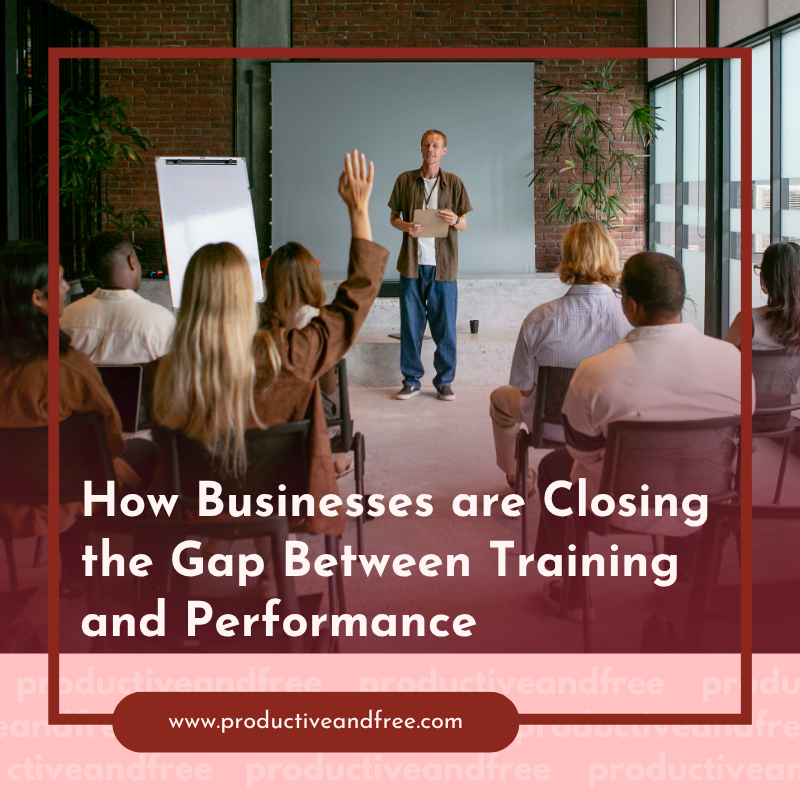
Most business owners and HR teams understand the necessity of complete and thorough training for their employees. However, employees feel they're not getting the training they need, with one in four employees stating they have not received enough training and 11% (via the HR Director) saying the training they have had isn't adequate. Poor training not only hinders an employee's ability to perform the job well, but it also impacts productivity, turnover, and career progression both internally and externally if employees outgrow the role they're working in.
Employees who aren't trained effectively can have a huge impact on the company's ability to grow, to deliver the right standards, and operate as you need to on a day-to-day basis.
With this in mind, let's take a look at some ways you can close the gap between training and performance so employees know what they need to know to do the job and to ensure the job they design is done correctly.
Standardized Training Delivery
If training is delivered inconsistently, then this isn't going to give a singular standard everyone is working towards. If people are picking up different things from different people, with nothing being checked, how do you know they're being taught anything or given the correct details to do what needs to be done?
The result here will be uneven capacity across the board, and the only way to overcome this is to overhaul how and when people are receiving training.
You need to have the core content of what people need to know and the training delivered in the same way, in the same format, and preferably by the same people. That doesn't mean leaving it to one person; it means those in charge of delivering training are working from the same playbook. This means when you take on new employees in more than one location, you can be confident they're both being trained the exact same way, regardless of location.

Role Specific Content
It's great having a training handbook for general aspects of the job that everyone needs to know, but if the training isn't role-specific, then you're letting your employees down instantly.
The training you deliver needs to be mapped to their actual workday and delivered in a way that gives them confidence and skills to work independently. Let's say you run a warehouse and you have teams bringing in orders from deliveries, pickers packing orders to go out, cleaners, and customer service reps who need training. Do they all need to know the same thing? If not, why? The reality is that all these job roles are different, and your training schedule needs to account for this.
Immersive Training Tools
Not everyone works the same way, and this means you need to find tools and technology that support employees in a way that benefits them in their job role and helps them reach competency faster and retain what they've learnt for longer.
This is especially important for people working in the field who might not have access to knowledge bases while out in the field to work. These are roles such as plumbers, HVAC technicians, electricians, roofers, glazers, etc.
Tools such as AR Training can help bridge the gap between competency and knowledge gaps. You can use the augmented reality tools to help you build role-specific training content that is designed for your company specifically, and get it deployed faster to teams to use where they are. Smart glasses are one innovative way companies are being trained in the field to not only train new hires but also capture the expertise of existing employees to build a knowledge base that reinforces uniformity and standards for every employee.
On-Demand Access
Fixed training patterns create bottlenecks, and it's not hard to see why it can get skipped, or people take longer to learn what they need to know.
If you need a trainer to be present or you're only scheduling training for certain days, then not only are you hindering employees' progression, but you're impacting productivity and standards across the board.
The idea here is to make sure that you're developing your training in a way that can be accessed whenever people need to.
This allows training to happen when it's relevant, whether it's during onboarding, a change of position, or when new responsibilities are added to an employee's job role. And when you have people in more than one location or working outside of the office environment, this can be extremely beneficial.
Manager Accountability
Training is only effective when it's valued by managers and those higher up. If the process isn't valued at this point, this won't filter through, and the responsibility will end up lying with L&D or HR.
The onus is on everyone in a more senior role. Managers need defined roles in training; they need to know what they should be training on and when, how to train, and how to spot gaps and issues with people's knowledge and abilities so they can be addressed sooner rather than later. This can be things like a manager confirming completion of certain aspects or blocks of training, reinforcing key points in day-to-day work, and flagging performance to identify gaps that ensure the right follow-up training is deployed where needed.
Continuous Reinforcement
Training isn't just a one-time kind of thing. It is something that needs to be refreshed and monitored on a frequent basis. Knowledge can drop off pretty quickly after the initial delivery. Especially if a lot of information was given out in the first instance. And even more so if training is on aspects of the job that are not performed regularly.
Businesses that close the gap understand this and have protocols in place for ongoing training in normal workflows, they have short knowledge checks at regular intervals, and they build training in team communications and at critical points in projects or the year, i.e. ahead of audits.
The goal here isn't to repeat training but to keep key knowledge active enough that it's accessible when needed rather than needing to be learned from scratch.










Share in the comments below: Questions go here

Ready to launch your dream business? Explore essential tips for finding the perfect opportunity that fuels your entrepreneurial ambitions.