
What Are Examples of Workplace Discrimination?
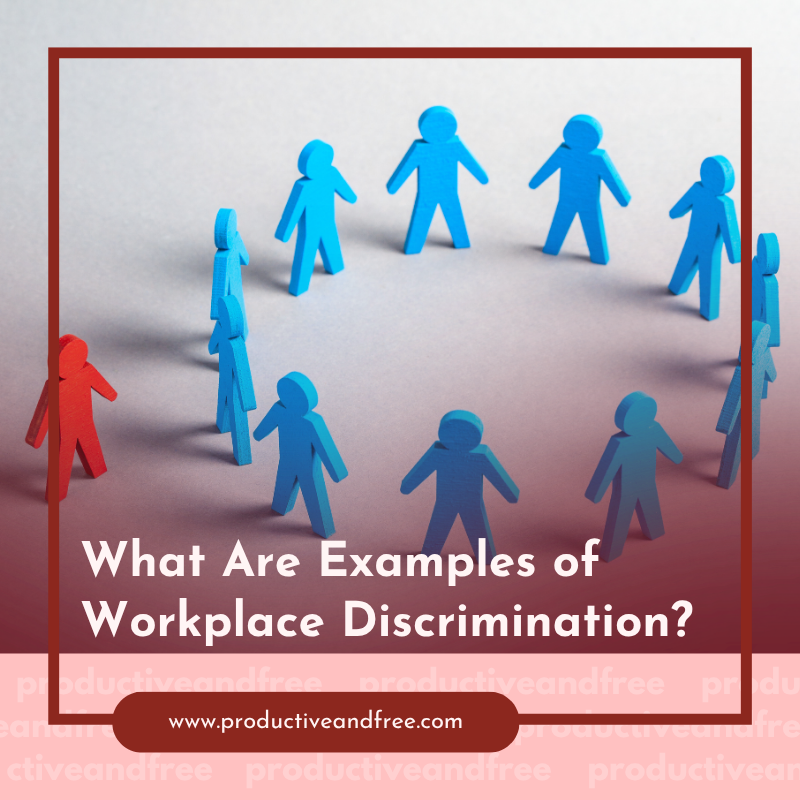
Did you know that 42% of Americans have either been victims of or witnessed workplace discrimination? And 40% of affected employees never report incidents to human resources, citing fear of retaliation and lack of confidentiality.
Discrimination at work involves the unfair treatment of an individual at work because of his or her characteristics. Such as race, sex, gender, age, religion, pregnancy, or national origin.
The statistics from Equal Employment Opportunity Commission show that wrongful dismissal and constructive discharge account for about 67% of workplace discrimination cases in the U.S.
According to https://www.dentonlaw.com/, having extensive experience in helping clients through legal matters such as employment contracts and claims involving wrongful termination, retaliation, discrimination, overtime, nondisclosure, and nonsolicitation agreements is crucial to work safely and fairly.
Let's build your confidence in understanding your rights that the law mandates for a safe work environment.
Race and National Origin Discrimination
The Civil Rights Act of 1964, Title VII, prohibits employers from using race, color, or national origin as grounds for making employment choices. The employment process begins with hiring and continues through pay and promotions and job assignments and discipline until the employee's termination.
Discrimination based on race is present when the employers do not hire those who are formally qualified due to their race or issue disciplinary tones that are more severe on minority members than on white people with equivalent positions within the same organization and tend to insult and defame other employees by giving racial slurs.
Disparate-impact discrimination under Title VII occurs when an organization implements neutral practices that unintentionally impact employees of a certain race more than others, even if there was no intent to discriminate.
No proof of intention is necessary for labor practices that recognize disparate impact as a legal issue.
Sex and Pregnancy Discrimination
Sex discrimination is covered under Title VII as a form of discrimination in terms of gender disparity as well as different treatment by receiving reduced pay, lack of promotion, and sexual harassment in the workplace.
Under the Equal Pay Act of 1963 and Title VII, it is unlawful for employers to discriminate against women employees and pay them differently from men who are doing the same jobs. Promotion based on assumption of family commitment is illegal.
Pregnancy discrimination has been enhanced under the Pregnant Workers Fairness Act. With this act taking effect in 2023, employers are required to make reasonable accommodations for pregnant women. They must cover job modification, additional rest breaks, and reassignment to other temporary jobs unless this accommodation leads to undue hardship.
The Equal Employment Opportunity Commission launched its initial five Pregnant Workers Fairness Act lawsuits during the fiscal year 2024. The company now faces a new violation charge for failing to provide required accommodations, which stands apart from existing pregnancy discrimination protection laws.
Sexual harassment is a special form of sexual discrimination. “Quid pro quo” sexual harassment takes place when a manager requires sexual favors from employees in return for job benefits, whereas sexual harassment through a hostile working environment involves conduct that creates an unpleasant working environment.

Age Discrimination
The Age Discrimination in Employment Act safeguards employees aged 40 and older from employment choices that consider age as a criterion.
According to research conducted by the American Association of Retired Persons, 61% of employees aged 45 and older have experienced or witnessed age bias at work.
The following cases demonstrate age discrimination:
• Companies firing older workers but keeping younger workers who have the same level of performance.
• Not including employees 40 years and older in leadership development programs.
• Screening out older applicants in job ads with coded phrases like "digital native," "recent graduate," and "high energy."
• Terminating an older employee, replacing them with a much younger colleague due to vague performance issues.
The Age Discrimination in Employment Act does not protect workers under 40. Age can also factor into limited situations, such as mandatory retirement ages for certain public safety roles.
Disability Discrimination and Failure to Accommodate
The Americans with Disabilities Act is a law that prevents discrimination against qualified individuals with disabilities in addition to providing accommodation by the employer, except for situations in which the accommodation causes undue hardship.
Americans with Disabilities Act violations involve three actions:
Denying a job applicant a position solely based on their visible disability.
Firing an individual based on their disability after knowing about their medical condition.
Failing to grant any form of accommodations that will assist a worker with a disability to carry out his or her duties.
Under the Americans with Disabilities Act, employers must engage in the accommodation process with the employee requesting accommodation. Failure to do so results in a separate violation under federal law.
According to Hattiesburg employment law attorney Daniel M. Waide, it is illegal under various federal laws for employers to discriminate against you in any aspect of employment.
Retaliation: The Most Frequently Filed Charge
Cited in 48% of all charges filed with the Equal Employment Opportunity Commission, retaliation may be the most common type of discrimination. However, many don’t fully undestand it.
An employee can experience retaliation when their employer takes any action that significantly harms their employment status because they reported protected activities.
The term "protected activities" refers to actions that include filing an Equal Employment Opportunity Commission charge, reporting discrimination to HR or a supervisor, requesting disability accommodations, asking about pay equity, and serving as a witness for discrimination investigations.
The Supreme Court has interpreted "materially adverse" broadly to include any action that would discourage a reasonable employee from exercising their rights, which includes reassignment to less desirable work and exclusion from meetings and increased scrutiny of performance and scheduling changes that cut income.
An employee does not need to prove that their underlying complaint was valid to win a retaliation claim. Employees who make good faith complaints receive protection while the success of their complaint remains uncertain.
Filing Deadlines and Next Steps
Discrimination happens in patterns rather than isolated instances. There are people who are overlooked and treated unfairly. Employees who get disciplined for behaviors that others exhibit without repercussions. There are also those who get fired after bringing up a concern.
Recognizing the pattern is important to understand what best to do. Next step would be to document these patterns.
The deadline to file an Equal Employment Opportunity Commission charge at the federal level is very specific: either 180 days from the discriminatory incident in the majority of the country or 300 days where there is an agency that deals with discrimination at the state level.
Failure to file within that window bars the employee from suing in federal court no matter how good the case is. Filing the charge doesn’t cost the employee anything. Most of the claims are settled before going to trial.




























Share in the comments below: Questions go here
Ready to launch your dream business? Explore essential tips for finding the perfect opportunity that fuels your entrepreneurial ambitions.