
Turns Out the Best Boardroom Floats
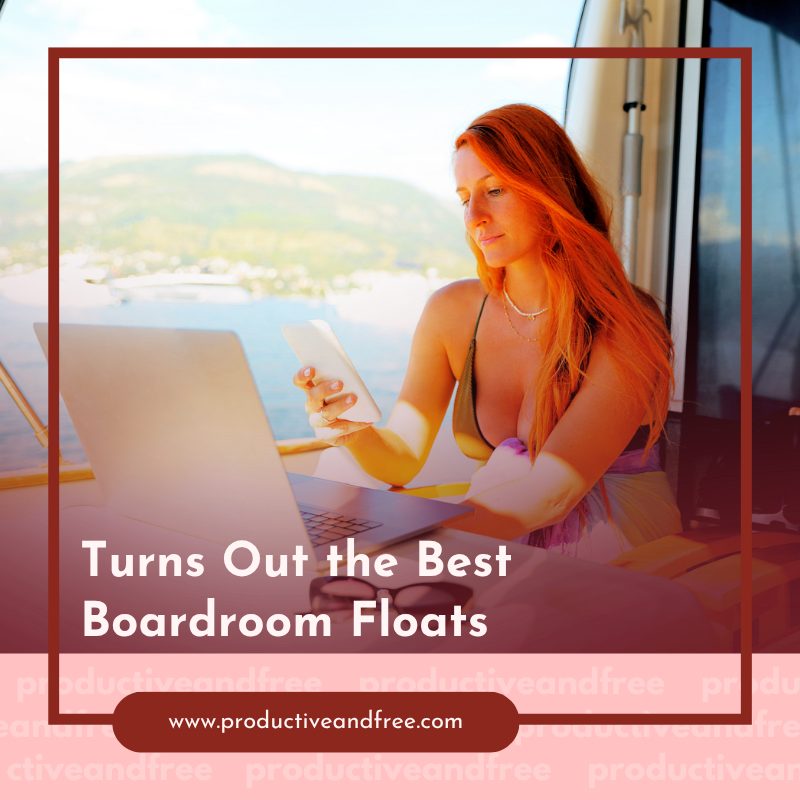
The conference table has long been the default setting for big decisions. Four walls, a long stretch of polished wood, and maybe a window view if you're lucky.
But a growing number of executives, entrepreneurs, and decision-makers are discovering that stepping away from a problem can help people come up with more creative ideas.
The breakthrough moment you're chasing might not happen in a windowless room with recycled air. It might happen somewhere completely unexpected, somewhere the walls move with the current and the scenery shifts by the hour.
Conventional office environments condition us to think in conventional ways.
Daily routines tend to be fairly repetitive, especially for office workers, which teaches our brains to expect the same activities every day, making it harder for us to come up with creative solutions. When you change the environment, you change the input your brain receives, creating space for fresh insights and unexpected connections.
Why Problem Solving Works Better on Water
Four days of immersion in nature, combined with disconnection from multimedia and technology, increased performance on a creativity and problem-solving task by 50% among a group of hikers. That is not a marginal improvement. It points to the way cognitive performance can change when people leave their normal working environment behind.
Water-based settings bring together several conditions that are difficult to recreate in an office: natural daylight, open views, gentle movement and a reduced sense of confinement. They also make it easier to step away from the digital interruptions that fragment attention throughout a typical workday.
Research into nature exposure at work has found that it can broaden cognitive processes and support creativity. Riverbanks, changing coastlines, passing villages and tidal rhythms provide a steady stream of new visual information without demanding constant attention. The environment remains stimulating, but it does not compete with the task in the same way as notifications, emails and office conversations.
Research participants who spent four days in a natural environment without their usual technology were also better able to draw on a wider range of cognitive resources when completing tasks involving creativity and complex convergent problem-solving.
The formula is relatively straightforward. Remove the constant ping of notifications, replace fluorescent lighting with natural daylight and introduce enough environmental change to keep the mind alert without overwhelming it.
Bruinisse Cruises as a Floating Boardroom
Bruinisse offers a particularly strong example of how a cruise can function as a boardroom without resembling a conventional corporate venue.
Located in Zeeland, the Dutch village sits beside the waters of the Grevelingenmeer and has a long connection with fishing, mussel cultivation and recreational sailing. It is not a large commercial centre filled with competing attractions. That relative quiet is part of what makes it suitable for strategic discussions.
A Bruinisse river cruise gives a team a defined period together while the surrounding scenery continues to change. Discussions can take place indoors, over a meal, beside a window or on an open deck. Instead of remaining around the same conference table for an entire day, participants can move naturally between formal and informal setting.
Celebrity Cruises itineraries that include Bruinisse allow passengers to experience working harbours, marinas, waterways and compact Dutch communities. On board, meeting areas and quieter communal spaces can support planning sessions, presentations and smaller conversations. Outside those sessions, the water and coastal landscape provide a natural separation between one stage of the discussion and the next.
This structure is useful for work that cannot be resolved during a standard one-hour meeting. A leadership team might spend the morning reviewing a difficult strategic question, pause while the ship moves through the surrounding waterways and return to the discussion later with a different perspective. Meals, deck walks and port visits create opportunities for ideas to be tested informally before they are brought back into the main session.
Bruinisse also works because it does not overpower the purpose of the trip. The setting is distinctive enough to interrupt routine thinking but calm enough to keep attention on the work. In that sense, the cruise becomes a complete floating boardroom: not simply a meeting room placed on a ship, but an environment designed around sustained discussion, changing perspectives and shared time.
Europe’s Other Unconventional Boardrooms
Bruinisse is not the only European destination where water and urban design can create an effective alternative to the traditional boardroom.
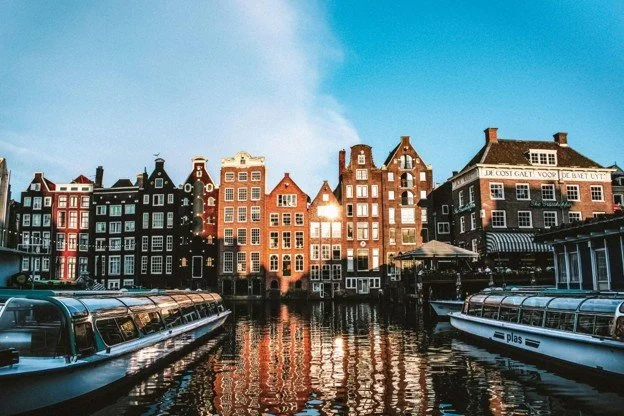
In Amsterdam, private canal boats can be arranged with tables, enclosed seating and catering, allowing small teams to hold discussions while passing through the historic canal network. The pace is slow, the route is contained and the city provides constant visual change without requiring participants to leave the meeting.
Copenhagen’s harbour offers a more contemporary version of the same idea. Converted waterfront buildings, harbour boats and meeting venues overlooking the water combine modern infrastructure with access to open space. A team can hold a structured session indoors and then continue the conversation during a walk beside the harbour or on a short boat journey.
Stockholm provides another strong setup through its archipelago. Small conference vessels and waterside retreats allow teams to move between city-based meetings and quieter islands. This works particularly well for multi-day planning sessions because the physical journey creates a clear transition away from everyday responsibilities.
In Budapest, boats on the Danube can provide private dining and meeting spaces with views of both sides of the city. The setting remains urban and accessible, but the movement of the river makes the session feel separate from an ordinary office event.
Hamburg’s harbour offers a more industrial backdrop. Meetings held on harbour vessels or in converted dockside buildings expose teams to working infrastructure, logistics and constant movement. This can suit discussions involving operations, growth, transport or large-scale development because the surroundings reinforce ideas of systems and coordination.
Lisbon’s Tagus waterfront, Oslo’s fjord, Lake Geneva and the Venetian Lagoon offer further variations. Some settings use boats as the primary meeting space. Others combine a waterside hotel or conference room with ferry journeys, harbour walks or short cruises between sessions.
The strongest examples share the same basic characteristics. They provide privacy, comfortable seating and the practical equipment required for serious work, but they also give participants access to daylight, movement and changing surroundings. They are boardrooms in function, even when there are no fixed walls and the view changes throughout the meeting.
How Shifting Context Changes Group Dynamics
Mid-term use of such an environment showed to blind the higher baseline values of EEG-MWI recorded and may prevent lower-back discomfort, suggesting a less mentally and physically exhausting meeting in this environment. Different seating arrangements, informal transitions between discussion spaces, and the absence of rigid hierarchies that conference rooms tend to reinforce all contribute to more productive conversations. When your meeting doesn't look or feel like every other meeting, people show up differently.
Traditional boardroom dynamics often reinforce existing power structures and discourage dissent. Moving the conversation to an unusual setting creates temporary equality. Everyone is slightly outside their comfort zone, which levels the playing field and encourages contributions from people who might stay quiet in more formal settings. This effect multiplies when the setting includes shared experiences like meals, scenic viewpoints, or collaborative activities that wouldn't happen in a standard office building.
The Science Behind Strategic Disconnection
Cognitive flexibility involves learning the structure of the environment, switching attention between features, dimensions and tasks, and adopting new rules in the face of uncertainty. Changing your physical environment forces exactly this kind of mental flexibility. Your brain has to process new visual information, adjust to unfamiliar sounds, and navigate spaces it hasn't memorized. That process of active adaptation creates the cognitive conditions where innovative thinking becomes more likely.
Studies also indicate that nature exposure enhances cognitive performance through multiple pathways. Lower stress levels, improved mood, and restored attentional capacity all contribute to better problem-solving outcomes. These effects are measurable and repeatable, not just anecdotal. Organizations that build strategic thinking time into natural or water-based settings consistently report better outcomes than those that rely exclusively on conventional office spaces.
The digital tools that make modern work possible also fragment our attention in ways that make deep thinking difficult.
Constant exposure to such technology may result in cognitive fatigue and an inability to focus deeply when engaging in creative problem-solving. Removing those tools, even temporarily, allows cognitive systems to recover and operate at higher capacity. This doesn't mean abandoning technology permanently. It means recognizing when disconnection serves strategic goals better than constant connectivity.
Making the Shift to Floating Strategy Sessions
Practical implementation doesn't require dramatic changes. Start by identifying the decisions or challenges that would benefit most from expanded thinking. Complex strategic planning, difficult personnel decisions, and long-term vision work all tend to produce better results when they happen outside routine office environments. Choose settings that offer natural beauty, minimal distractions, and enough comfort to support extended focus.
Look for workplaces that stimulate productivity through environmental design rather than just ergonomic furniture. River cruises, coastal retreats, and lakeside venues all offer versions of this experience. The key features include access to water views, opportunities for informal conversation, and structured time away from digital devices. Build in physical movement between discussion sessions, whether that means walking the deck, exploring a port stop, or simply changing seating areas throughout the day.
The most successful implementations combine structured agenda time with unstructured exploration. Give your team clear objectives and deliverables, but also build in time for the kind of spontaneous conversations that spark new ideas. The balance between structure and flexibility matters more in these settings than it does in conventional offices, where rigid schedules often serve as a substitute for genuine focus.
This approach isn't about abandoning the office entirely or rejecting traditional business practices. It's about recognizing that different kinds of thinking require different environments and being willing to match the setting to the challenge. Sometimes the best boardroom isn't a room at all. Sometimes it floats.











Share in the comments below: Questions go here
Maximize your Canva lead magnets to generate daily traffic. Explore effective techniques to attract more visitors and enhance your online presence!