
Your Spreadsheet Is Not a Membership Strategy
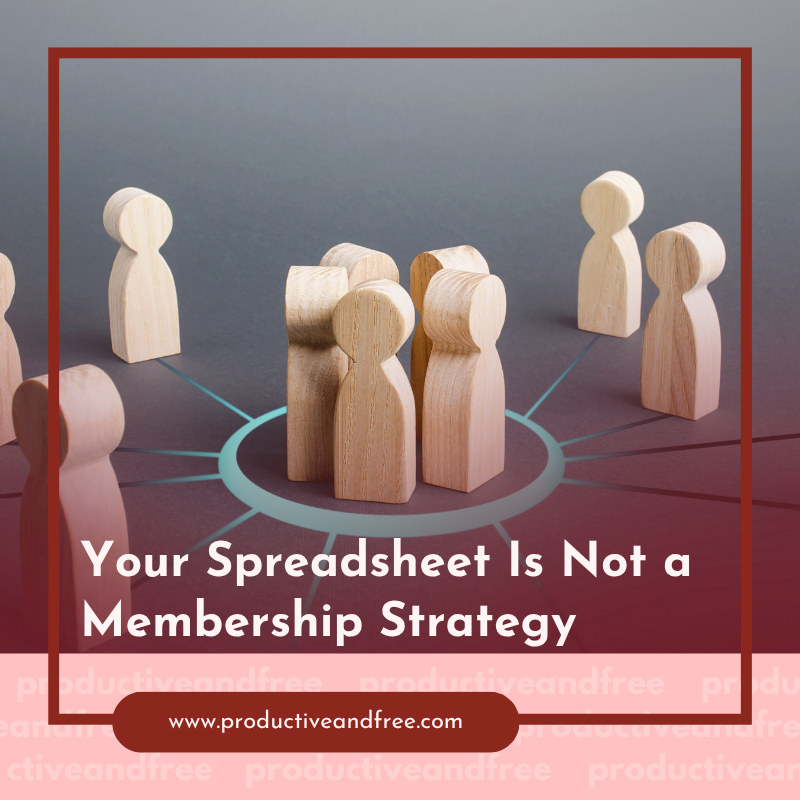
Running a membership organization without a proper system is like hosting a dinner party where you track RSVPs on sticky notes scattered across your kitchen counter.
Sure, it works when you have three guests. But when you're managing hundreds of members, renewal dates, event registrations, and payment processing, that pile of Post-its becomes a liability.
Many association leaders, nonprofit directors, and club managers initially turn to spreadsheets because they're familiar, free, and seemingly flexible.
A Dartmouth study estimated that as many as 88% of all spreadsheets contain at least one data error, and the received wisdom is that about 5% of all formulas in spreadsheets contain errors. These aren't trivial typos.
Spreadsheet errors can result in significant financial losses, damage to reputation, and legal complications.
The truth hits hardest during renewal season when you realize half your contact information is outdated, you've lost track of who paid what, and your volunteer treasurer has accidentally overwritten last quarter's financial data.
Why Spreadsheets Fail Member Organizations
Spreadsheets weren't built for managing people, relationships, or recurring revenue streams. They were designed for calculations and simple record-keeping. When you stretch them into membership management territory, the cracks start showing fast.
Using spreadsheets for business processes often leads to version control challenges. When the business doesn't keep track of and determine which version should be used for all data entry, multiple conflicting versions with different data sets can be created. The confusion can cause serious issues when these conflicting versions are used for business decisions.
Picture this common scenario. Your membership coordinator updates the master file on their laptop. Meanwhile, your events volunteer downloads an older version, adds new registrants, and emails it back. Your treasurer has been working from a third version they saved two weeks ago.
Now you have three spreadsheets, each claiming to be the source of truth, and nobody knows which member actually renewed.
Whether it's mistakes from manual data entry or the use of outdated data, spreadsheet-based analytics are prone to errors, particularly when the analytics is based on large and complex data sets. Even a small mistake can have significant consequences, especially if it goes undetected for a long time.
The Hidden Costs Nobody Talks About
The real expense of spreadsheet reliance isn't the software itself. It's the dozens of hours your staff and volunteers spend reconciling data, manually sending renewal reminders, copying information between files, and tracking down payment discrepancies.
According to MGI's 2025 Membership Marketing Benchmarking Report, the current industry median overall renewal rate is 84%. But here's what matters more:
MGI's 2025 research found that 52% of non-renewals cite disengagement as the primary cause. When you're buried in spreadsheet busywork, you're not engaging members. You're managing cells.
Organizations stuck in spreadsheet mode spend their energy on administrative survival rather than strategic growth. They can't easily segment their membership base to send targeted communications. They struggle to identify their most engaged members or spot concerning trends in participation. They definitely can't automate renewal reminders or process online payments smoothly.

What Dedicated Management Systems Actually Do
Moving to a member management platform fundamentally changes how organizations operate. These systems centralize member data in one secure database that multiple team members can access simultaneously without creating conflicting versions. Wild Apricot, for instance, offers automated renewal processes, integrated payment processing, and built-in communication tools alongside customizable membership databases.
Wild Apricot's membership management features cut down administrative work with automated member renewals and invoicing, recurring payments, scheduled communications and self-service options for members. Plus, with all member information stored in the customizable online database, organizations save hours each week.
Instead of manually tracking who joined when, who's due for renewal, and who attended which events, the platform handles these details automatically. Members can update their own contact information, register for events online, and manage their payment methods through self-service portals.
This shift alone eliminates data entry errors that plague manual systems.
Proper management platforms also provide real-time reporting that actually helps with decision-making. You can instantly see your member retention rates, track event attendance patterns, monitor revenue streams, and identify members at risk of lapsing.
Making the Transition Without Losing Your Mind
The prospect of migrating years of membership data from spreadsheets understandably causes anxiety. But organizations consistently report the transition takes less time than expected, typically implemented within days or weeks.
Organizations that implement automated renewal processes see an immediate 10-15% improvement in member retention. That boost alone often justifies the switch within the first renewal cycle.
Start by cleaning your current data. Merge duplicate records, standardize address formats, and update outdated contact information before importing anything. Most platforms provide import templates and step-by-step migration guides. Many also offer onboarding support to walk you through the initial setup.
The key mindset shift is recognizing that your spreadsheet isn't actually saving you money or time anymore. It's creating invisible costs through errors, inefficiency, and missed opportunities for engagement. Every hour spent reconciling conflicting versions or manually processing renewals is an hour not spent on programs, outreach, or member relationship building.
Building Something Better
Your members deserve better than a system held together with formulas and prayers. They deserve seamless online registration, automated renewal reminders, and a professional member portal where they can manage their account independently.
More importantly, your team deserves tools that work with them instead of against them. Software built specifically for membership management understands the unique challenges of running associations, clubs, and nonprofits. It anticipates your needs around membership levels, event registration, payment processing, and communication workflows.
The organizations thriving right now aren't necessarily those with the biggest budgets or largest staffs. They're the ones who recognized that infrastructure matters, made the strategic decision to invest in proper systems, and freed themselves to focus on their actual mission rather than spreadsheet maintenance.



























Share in the comments below: Questions go here
Maximize your Canva lead magnets to generate daily traffic. Explore effective techniques to attract more visitors and enhance your online presence!