
How Small Event Businesses Can Save Time with Smarter Power Planning
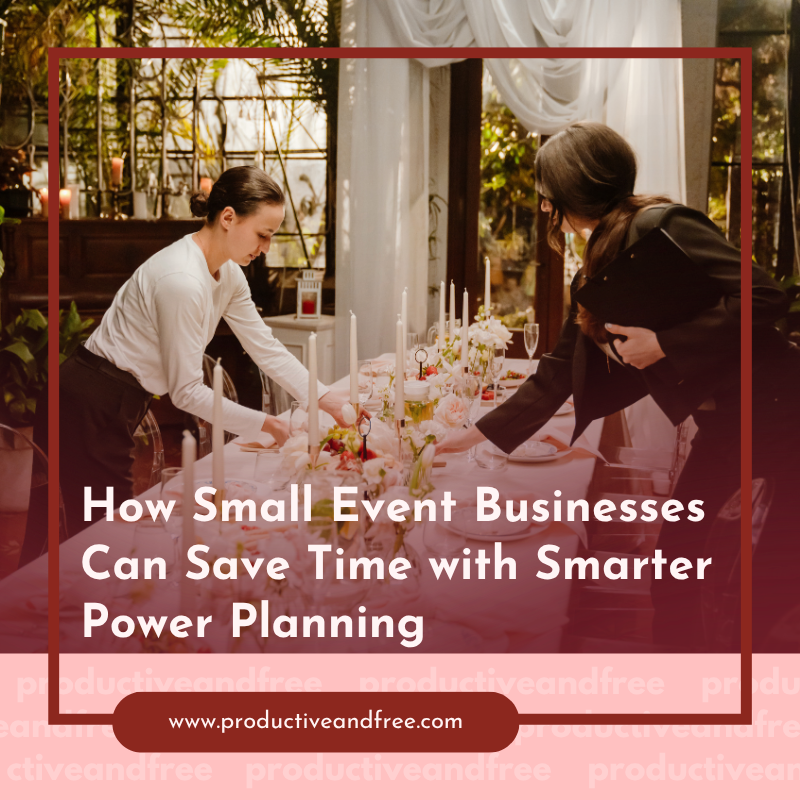
Running a small event business, whether that means catering, mobile bars, portable staging, or equipment rentals, means constantly solving logistical puzzles under real time pressure. Among all the moving pieces, power planning is one of the areas most likely to eat up hours of preparation time and create last minute scrambling if it is not approached systematically from the start.
The good news is that smarter power planning is largely a matter of building a few consistent habits and systems rather than requiring significant additional investment. Here is a practical look at how small event businesses can save real time on power planning, explained section by section.
1. Build a Standard Power Requirements Template
Many small event businesses recalculate power needs from scratch for every single event, which wastes considerable time repeating work that could largely be standardized. Building a template that lists the power draw for commonly used equipment, lighting rigs, sound systems, food warmers, allows staff to quickly estimate total power needs for a new event by simply referencing established figures rather than researching specifications each time.
This template becomes more valuable the more events a business runs, since patterns emerge quickly around which equipment combinations are used repeatedly, letting staff produce accurate power estimates in minutes rather than the hour or more it might take to calculate everything from scratch for each new booking.
2. Standardize Cable Inventory to Reduce Setup Confusion
Event setups often involve a tangle of cables in varying lengths, conditions, and specifications, which creates confusion and wasted time during setup as staff try to identify which cable is appropriate for which piece of equipment. Standardizing on a consistent set of cable types and clearly labeling inventory by length and rated capacity considerably speeds up setup at every event.
Color code or label cables by length and amperage rating so staff can identify the right cable instantly
Retire and replace cables showing wear rather than mixing questionable cables into active inventory
This kind of organization pays off directly in setup speed, since staff spend less time testing or guessing which cable fits a given need and more time actually completing the setup process efficiently.
3. Invest in Quality Cabling That Reduces On Site Troubleshooting
Cheap or worn cabling is one of the most common sources of unplanned delays at events, whether through intermittent connections, overheating under sustained load, or outright failure partway through setup or the event itself. Investing in reliable power cables designed to handle the repeated setup, transport, and varied conditions that event work involves reduces the time spent troubleshooting power issues on site, which is exactly the kind of hidden time cost that adds up significantly across a busy event season.
Companies like Duraline has designed its cabling with this kind of repeated, demanding use case specifically in mind, recognizing that event businesses need equipment that holds up reliably across dozens or hundreds of setup and teardown cycles each year without becoming a recurring source of on site problems.
4. Create a Pre Event Power Checklist
A simple, consistent pre event checklist, confirming power source location, verifying cable lengths match the venue layout, testing equipment before the event begins, catches potential problems while there is still time to solve them calmly rather than during the middle of an active event when troubleshooting becomes far more stressful and time pressured.
This kind of proactive checking takes relatively little time upfront but can save considerably more time and stress later, since catching a power issue during setup is vastly preferable to discovering it once guests have arrived and the event is already underway.
5. Train Staff on Basic Power Troubleshooting
Small event businesses often rely on staff who are skilled at their primary role, bartending, cooking, event coordination, but who have limited experience with basic electrical troubleshooting. A short training session covering common issues, checking connections, identifying tripped circuits, recognizing overloaded circuits, empowers staff to solve minor problems independently rather than needing to call in specialized help for every small issue.
According to the Event Industry Council, operational efficiency and staff cross training have become increasingly important factors in event business profitability, particularly for smaller operations where hiring specialized technical staff for every event is not financially practical. Building this kind of practical knowledge into general staff training pays off across every event a business runs, not just the occasional one where a power issue happens to arise.
6. Review and Refine After Each Event
Taking a few minutes after each event to note what worked well and what created friction around power planning builds an increasingly refined system over time. Small adjustments, updating the standard template, retiring a cable that caused problems, adjusting the pre event checklist, compound into meaningfully smoother operations after just a handful of events.
This continuous improvement approach costs almost nothing in terms of additional time but produces a power planning system that gets measurably better and faster with each event, rather than staying static or recreating the same problems repeatedly across a busy season.
Final Thoughts
Power planning does not need to be a recurring source of stress and wasted time for small event businesses. Building standardized templates, organizing cable inventory clearly, investing in quality cabling, and training staff on basic troubleshooting all contribute to a system that saves meaningful time across every event a business runs, not just the occasional smooth one.
For small event businesses operating on tight margins and tighter schedules, these efficiency gains matter considerably. The time saved through smarter power planning translates directly into more events handled per season, less staff stress, and a smoother experience for the clients whose events depend on everything working exactly as planned.










Share in the comments below: Questions go here

Ready to launch your dream business? Explore essential tips for finding the perfect opportunity that fuels your entrepreneurial ambitions.