
The Rise of Online Doctorates Among Working Professionals
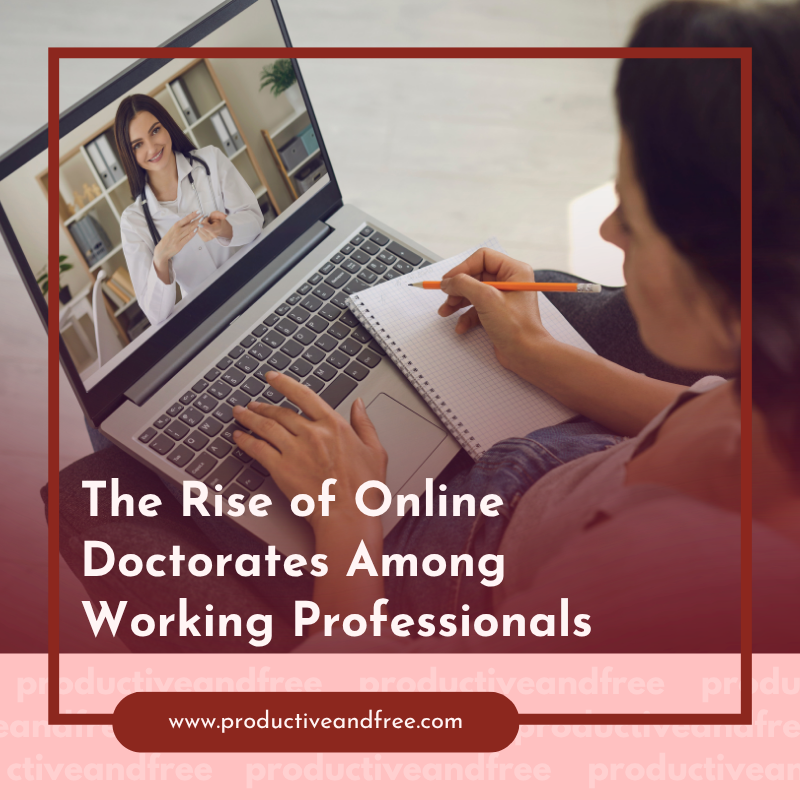
Online doctoral education has become an increasingly common option for professionals seeking advanced qualifications while remaining in the workforce. According to the National Center for Education Statistics, more than 4.9 million students enrolled exclusively in distance education courses at degree-granting postsecondary institutions in fall 2022, highlighting the continued demand for flexible higher education.
Online learning has reshaped higher education over the past decade, extending opportunities beyond traditional campus settings. Professionals who once viewed a doctorate as incompatible with full-time employment now have access to programs designed to accommodate demanding schedules while maintaining rigorous academic standards. Business, education, healthcare and technology have all seen growing interest in advanced qualifications that combine research with workplace application.
As universities continue to expand online doctoral offerings, understanding what drives this trend offers useful context for anyone following developments in higher education and workforce learning.
Why More Professionals Are Choosing Online Doctorates
Online doctoral enrollment has benefited from wider acceptance of remote learning across higher education. According to the National Center for Education Statistics, approximately 53 per cent of all postsecondary students took at least one distance education course during fall 2022, while more than 4.9 million studied exclusively online. These figures illustrate how digital learning has become an established part of the higher education system rather than a temporary alternative.
For business professionals, a DBA online program represents one example of how universities have adapted doctoral education to meet the needs of experienced employees. Current programs typically focus on applied business research rather than purely theoretical study. Students investigate real organizational challenges while developing leadership, analytical and decision making skills. Many programs deliver coursework entirely online, include a short virtual residency and conclude with either a dissertation or an applied doctoral research project that addresses a practical business issue. This format allows professionals to remain employed while completing advanced academic work.
Growing employer recognition has also contributed to demand. Organizations increasingly value professionals who can evaluate evidence, interpret data and apply research methods to complex business decisions. Rather than stepping away from their careers, many doctoral candidates use their workplaces as the basis for research projects, creating opportunities to connect academic study with practical experience.
Balancing Work Study and Personal Life
Managing doctoral study alongside full-time employment remains one of the greatest challenges for online learners. Research projects often extend over several years, requiring sustained commitment and careful planning.
Many students establish structured weekly schedules that separate research, coursework and personal responsibilities. Breaking larger assignments into smaller milestones can help maintain progress without overwhelming existing work commitments. Consistency often proves more effective than attempting to complete large amounts of work during occasional free weekends. Program flexibility also supports working professionals. Recorded lectures, digital libraries, online seminars and discussion forums allow students to participate outside conventional class hours. Individuals who work rotating shifts, travel regularly or manage family responsibilities often benefit from this level of accessibility.
Online doctoral programs also encourage collaboration despite physical distance. Cohort models, virtual research groups and regular meetings with faculty supervisors help maintain academic engagement throughout lengthy research projects. These interactions provide opportunities for feedback while helping students remain connected to their academic community.

How Flexible Learning Fits Around a Full Time Career
Flexible delivery does not reduce academic expectations. Accredited online doctoral programs generally require the same research quality, critical analysis and scholarly writing standards as campus-based degrees. The primary difference lies in how students access learning. Online platforms allow coursework, research supervision and collaboration to take place remotely, reducing the need for regular travel while giving students greater control over when they complete academic tasks.
Technology has supported this transition. Secure video conferencing, collaborative document platforms and extensive digital research databases have made communication between students and faculty more efficient than in previous years. Many doctoral candidates now complete substantial research without frequent visits to a physical campus.
Employers may also benefit from applied doctoral research. Rather than examining abstract topics, students often investigate questions directly related to organizational performance, leadership, innovation or operational improvement. This creates opportunities for academic work to generate practical findings within existing workplaces while allowing professionals to continue contributing to their organizations throughout their studies.
The Career Benefits Beyond the Degree
Career progression remains an important motivation for many doctoral students, although professional development extends beyond obtaining the qualification itself. The research process strengthens skills that employers increasingly value, including critical thinking, data analysis, strategic planning, and evidence-based decision-making. These capabilities apply across industries where organizations face growing volumes of information and increasingly complex operational challenges.
According to the Gallup and Lumina Foundation State of Higher Education 2025 report, 86 per cent of adults who considered enrolling in higher education cited career-related reasons, such as improving job opportunities, increasing earnings, or gaining new skills, as key motivations. The findings suggest that career advancement continues to influence decisions about further education across the adult learner population.
Graduates may move into executive leadership, consulting, higher education or specialist advisory roles depending on their discipline and professional background. Others remain within their existing organizations while taking on responsibilities that require stronger research and strategic planning capabilities.
Completing a doctorate also demonstrates resilience, long-term project management and independent problem-solving. These qualities often carry value beyond academic credentials alone, particularly in senior leadership positions where evidence-based decision-making and organizational analysis have become increasingly important.




























Share in the comments below: Questions go here
Discover how traveling can enhance your understanding of customer needs and preferences. Learn valuable insights to boost your entrepreneurial success.