
Productivity Systems for Delivery-Based Businesses (Copy)
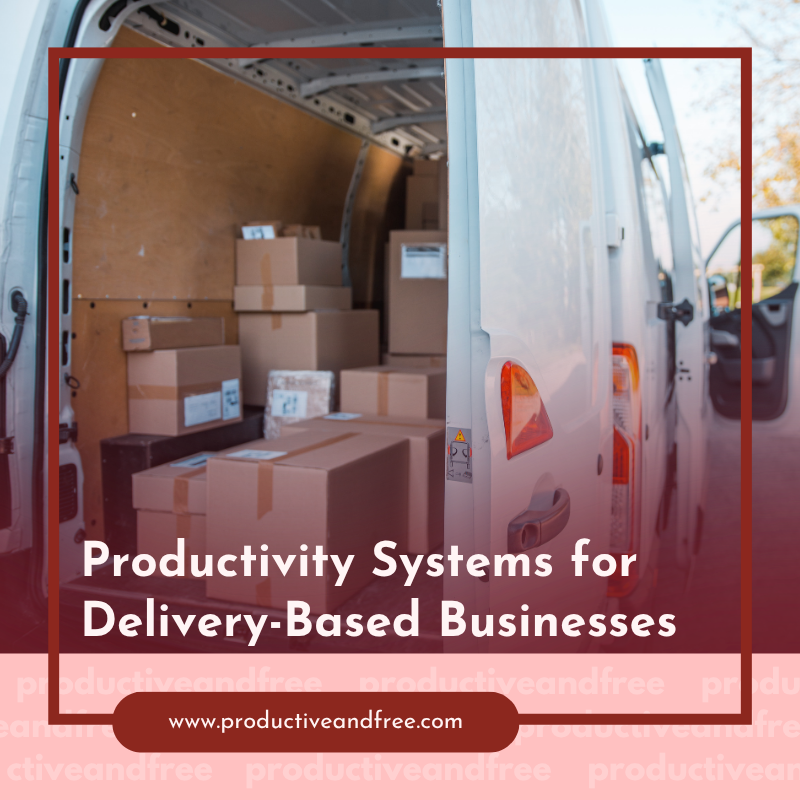
Delivery-based businesses run on timing. Orders need to be received, prepared, routed, assigned, delivered, confirmed, and reviewed without constant confusion.
When the process is loose, productivity drops fast. Drivers wait for instructions. Staff pack orders late. Routes overlap. Customers call for updates. Managers spend the day fixing problems that should have been prevented.
A good productivity system helps the whole operation move with less friction. It does not need to be complicated, but it does need to be consistent.
Start With a Clear Delivery Workflow
Before adding tools, define the actual workflow. Every business should know what happens from the moment an order comes in to the moment it is completed.
Map the steps in order.
This may include order intake, payment confirmation, picking, packing, labeling, route planning, driver assignment, customer notification, proof of delivery, and post-delivery review.
The workflow should also show who owns each step.
If everyone assumes someone else is handling dispatch or customer updates, delays will happen.
Clear ownership improves speed and accountability.
Plan Routes Before the Day Gets Busy
Route planning should happen before drivers are already waiting. Last-minute routing creates pressure and often leads to inefficient stops, missed windows, and unnecessary backtracking.
A free delivery planner can help delivery-based businesses organize stops, group nearby orders, and create more practical routes before the day starts.
This is useful for small retailers, food businesses, florists, furniture delivery teams, local couriers, service companies, and mobile repair teams.
Good route planning should account for distance, delivery windows, vehicle capacity, driver availability, parking limits, and customer instructions.
The shortest route is not always the most productive one.
The best route is the one that drivers can complete safely and reliably.

Standardize Order Preparation
Delivery productivity depends heavily on what happens before the driver leaves. If orders are not ready, packed, labeled, or staged properly, the route starts late.
Create a standard preparation checklist.
Orders should be checked for accuracy, packaging, address details, delivery notes, customer phone number, and handling instructions.
Order Prep Items to Check
Important items include:
● Customer name
● Full delivery address
● Phone number
● Delivery window
● Package count
● Special handling notes
● Payment status
● Route or zone label
● Proof of delivery requirement
The goal is to reduce questions at the loading stage.
Drivers should not need to search for missing items or guess which package belongs to which stop.
Create Delivery Zones
Delivery zones make work easier to assign and measure. Instead of treating every order separately, group deliveries by area, neighborhood, zip code, or route cluster.
Zones help reduce travel time.
They also make it easier for drivers to learn parking patterns, common building access issues, traffic habits, and customer expectations in their assigned areas.
A small business may start with simple zones such as north, south, east, and west.
A growing business may need tighter zones based on order volume and route density.
Zones should be reviewed regularly.
If one zone becomes overloaded while another stays light, the system needs adjustment.
Use Status Updates to Reduce Interruptions
Managers lose time when they have to ask for updates all day. Drivers also lose time when they have to answer repeated calls while working.
A simple status system can reduce interruptions.
Use clear labels such as ready, assigned, loaded, out for delivery, delayed, completed, failed, or returned.
These updates help office staff answer customer questions without interrupting drivers.
They also help managers see where the day is slowing down.
The update process should be quick.
If it takes too long, people will skip it.
Build a Driver Communication System
Delivery teams need one reliable communication channel. Scattered calls, texts, group chats, emails, and paper notes create confusion.
Choose one main channel for route changes, urgent updates, customer access issues, failed deliveries, and safety concerns.
Communication Rules to Set
Useful rules include:
● Where updates are sent
● Who can change a route
● When drivers should call
● How failed deliveries are reported
● How urgent issues are escalated
● What details must be documented
● When customers should be contacted
● How photos are stored
● Who closes the delivery record
Clear rules help drivers focus on the route instead of sorting through mixed messages.
Measure the Right Productivity Metrics
Delivery productivity is not only about how many stops a driver completes. Some routes are harder than others. Some deliveries require stairs, signatures, heavy lifting, parking searches, or customer contact.
Track metrics that show the real workload.
Useful measures include on-time delivery rate, failed delivery rate, average stop time, route completion time, driver idle time, customer complaints, redelivery rate, and miles per delivery.
These numbers help managers improve the system instead of guessing.
If a route always finishes late, the issue may be planning, not driver performance.
Keep the Office or Dispatch Area Organized
Delivery productivity also depends on the workspace behind the routes. The office, dispatch desk, packing area, or small warehouse should make work easier, not slower.
Keep packing materials, labels, scanners, driver notes, route sheets, and customer service tools in predictable places.
A clean workspace helps staff move faster and reduces mistakes.
For customer-facing delivery businesses, office and pickup areas should also look intentional. Simple visual touches such as branded displays, clear signs, or neon signs can help make the business space easier to recognize while keeping the environment more polished.
The design should support the operation.
It should not create clutter or slow the team down.
Review the System Weekly
A productivity system only works if it improves over time. Delivery problems should be reviewed while the details are still fresh.
Look at late routes, failed deliveries, customer complaints, packing mistakes, driver feedback, and repeated access issues.
Pick one or two problems to fix each week.
Do not try to rebuild the whole process at once.
Small changes can have a major effect when they remove repeated delays.
Final Thoughts
Delivery-based businesses need systems that make daily work easier to control. Clear workflows, route planning, standard order preparation, delivery zones, status updates, driver communication, and useful metrics all improve productivity.
The goal is not to make the process rigid.
The goal is to remove avoidable confusion so orders move smoothly from preparation to completion.
When the delivery system is organized, teams work faster, customers get better updates, and managers spend less time solving the same problems every day.





























Share in the comments below: Questions go here
Ready to launch your dream business? Explore essential tips for finding the perfect opportunity that fuels your entrepreneurial ambitions.