
How to Optimize Your Content for AI Search
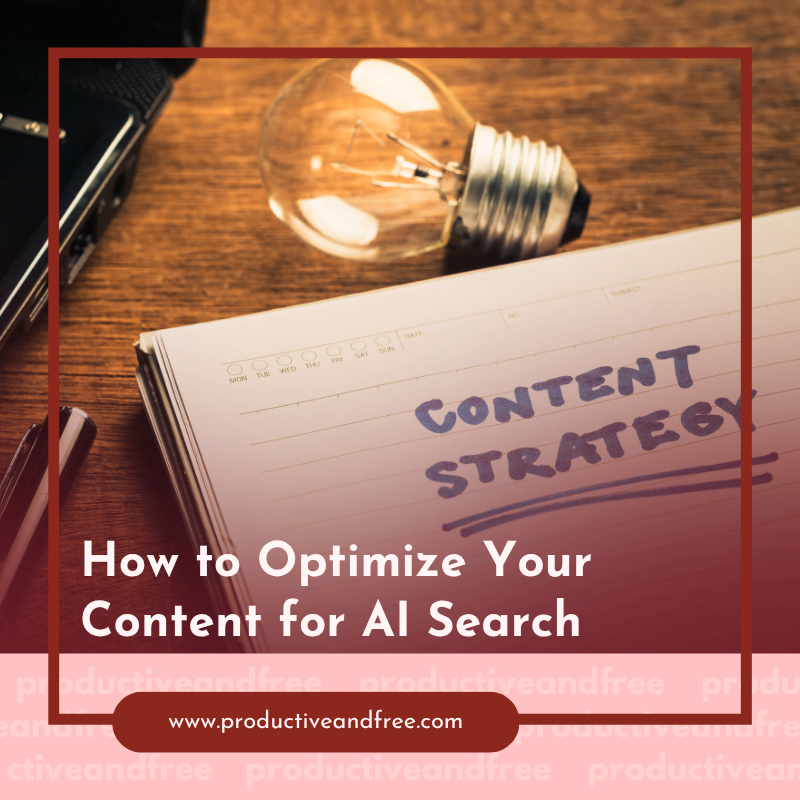
The way we find information online is changing. For years, we've focused on getting our websites to the top of a Google search results page. Now, with AI chatbots and integrated AI answers in search engines, the goal is shifting. It's no longer just about being seen; it's about being cited. This means making your content good enough for AI models to trust it as a source for their answers, which helps your brand become an authority online.
Why AI Citation Matters Now
When someone asks an AI tool a question, it pulls information from different online sources to give one direct answer. If your content is used for that answer, you gain incredible credibility. Unlike a list of blue links, being the cited source in an AI response makes your content the definitive answer, not just one option among many.
This direct citation can bring in highly qualified traffic from people who are already interested in the topic. They see your brand as the expert because the AI told them so. As more people use AI for quick, conversational answers, becoming a trusted source is key to staying visible and authoritative in your niche. It’s a big change from trying to get clicks to competing for credibility. That's exactly why understanding how AI selects its sources has become so important.

Understanding Answer Engine Optimization
This new challenge needs a new approach: Answer Engine Optimization (AEO). Traditional Search Engine Optimization (SEO) focuses on things that help you rank in a list of search results. AEO, however, is about structuring your content to be the most accurate, concise, and citable answer to a specific question. It’s a shift from keywords and backlinks to facts, clarity, and context.
An effective answer engine optimization framework means figuring out what questions your audience is asking and creating content that answers them directly and authoritatively. This can be tricky, as it requires a deep look at entities, facts, and what users are really trying to find. For businesses wanting to make this easier, a dedicated AEO platform can help find opportunities and structure content to meet AI models' strict requirements. The goal is to make your information so clear and reliable that an AI has to use it.
Crafting Content for AI Readiness
To increase the chances of being cited, your content should be structured in a way that's easy for AI systems to interpret. This doesn't mean your writing has to be robotic, but it does need to be well-organized and unambiguous.
Here are a few practical steps:
● Answer questions directly: Start your content by giving a clear, short answer to the main question. You can add more details later on the page.
● Use structured data: Add schema markup to your website. This code tells search engines exactly what your content is about, making it easier for them to understand facts.
● Cite your sources: Link to other authoritative websites to back up what you say. This shows your information is well-researched and trustworthy.
● Keep it simple: Use clear headings, short paragraphs, and simple language. An effective AEO content strategy often means creating dedicated FAQ sections or using a Q&A format.
Maintain Brand Voice with AI
A common worry is that optimizing for AI will make your content lose its personality. But clarity and brand voice don't have to be separate. You can be factual and direct while still sounding like your brand. Your unique perspective, tone, and examples are what make your content different from a dry encyclopedia entry.
Think of it like talking to a very smart but literal person. You'd state your point clearly first, then add your own flair, stories, and insights to make it engaging. The factual, AI-friendly structure provides the foundation, but your brand's voice gives it character and connects with the human reader who ultimately clicks through. Authenticity remains a key driver of trust, for both people and the AI models learning from them.
Measure Your Content's AI Score
How do you know if your AEO efforts are working? Unlike traditional SEO, there isn't a single "AI ranking" metric to track. Instead, you need to look at several indicators. Check your web analytics for referral traffic from AI services. You can also regularly use popular AI tools to ask questions related to your industry and see if your content is cited or used to form answers.
Another way is to track brand mentions that don't include links. If you see your company name in AI-generated answers, it means your brand is being recognized as an authority. Over time, as AEO becomes more common, we can expect more advanced tools to track this kind of performance. But for now, observation and analysis are your best tools.
Optimizing for AI isn't just another marketing task; it's about making sure your digital presence is ready for the future. By creating clear, factual, and authoritative content, you position your brand to be the trusted source in the next era of information discovery.

























Share in the comments below: Questions go here

Maximize productivity by streamlining your field operations. Explore effective solutions that drive efficiency and elevate your team's performance!