
7 Common Myths About Restraining Orders
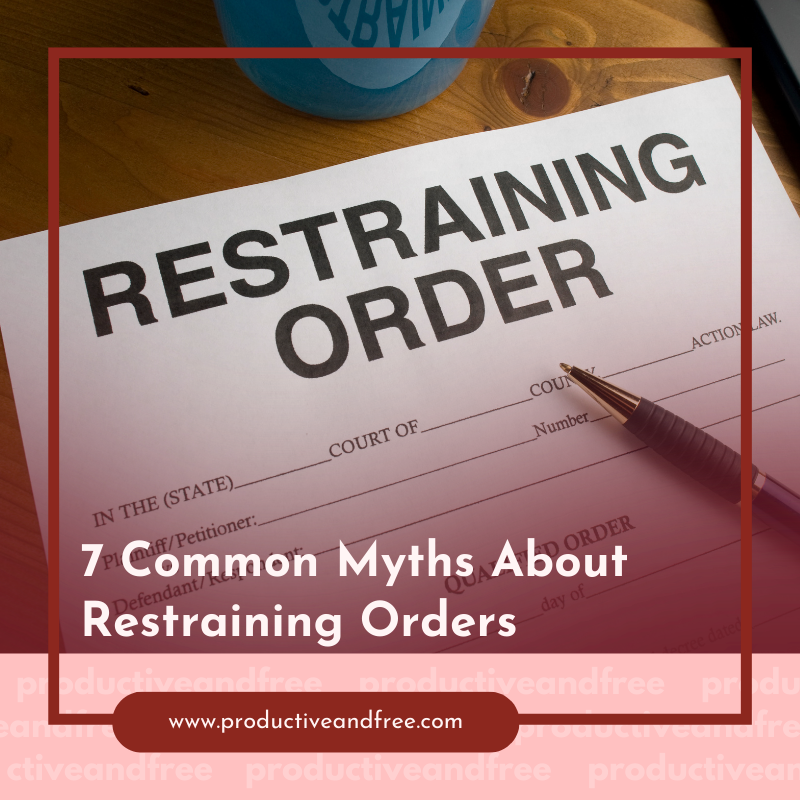
If you’ve ever watched Law & Order: Special Victims Unit, you’re probably familiar with the term restraining order. TV series typically show characters rushing to court to request protection from someone dangerous. The typical case shows a victim in danger and highlights how the legal system can step in. Once thing is for sure, even when the stories are dramatized, there’s no denying that they do a great job at introducing the idea of restraining orders.
Yet, outside of the TV world, restraining orders may be difficult to understand. You never know what kind of situations you may end up facing in life, so you certainly want to have a good understanding of what they do.
In simple terms, a restraining order is a legal directive issued by a court that limits or completely prohibits contact between two individuals. The purpos ebay seem punitive, but in reality, it is designed to prevent future harm by setting enforceable boundaries. They can restrict communication, physical proximity, or even shared living arrangements, depending on the situation.
Surprisingly, restraining orders are a lot more common than you think, and they don’t always involve situations as dramatic as the ones displayed in SVU. Here are 7 misconceptions about restraining orders.

Myth #1: They’re Only for Physical Abuse
Absolutely not.
Restraining orders can be available to victims of physical abuse, but this is far from being the only reason to seek protection. Courts also recognize a wide range of abuse cases:
Emotional abuse
Threats
Harassment
Stalking
Etc.
It may come as a surprise, but repeated unwanted messages, or showing up invented can justify a restraining order in specific cases.
Stalking, in particular, is a major reason people seek legal protection. Even when there is no physical harm, persistent unwanted attention can create a sense of fear and danger.
Myth #2: It’s a One-Size-Fits-All Tool
Most people believe that restraining orders are a single, standard document that is applied to a variety of situations. In reality, there are multiple types of orders that serve different purposes.
For instance, you can secure a temporary restraining order, an emergency one, and even a longer-term order.
Because the conditions of these orders are different, it makes sense that their terms would be different, too. Some may require the restrained person to stay a certain distance away, while others can directly prohibit all forms of communication. When a child is involved, the restraining order could also address custody needs or living arrangements.
Myth #3: It’s Only Between Spouses or Romantic Partners
No. While this is the situation media tends to talk about the most, restraining orders can apply to a wide range of situations, including:
Family members
Roommates
Coworkers
Neighbors
Acquaintances
Strangers
Ultimately, if someone’s behavior creates fear, a restraining order can be used, no matter what the relationship is.
Myth #4: You Can’t Violate Your Own Restraining Order
You would assume that the only person who can violate a restraining order is the one you are trying to protect yourself from. In fact, both the restrained person and yourself could, accidentally or intentionally, violate a restraining order. There will be careful consideration as to whether the violation was intentional before looking into legal consequences.
The legal burden tends to fall on the restrained individual. But that doesn’t mean that your actions can’t undermine the order. You may not realize it, but if the restraining order prohibits any form of communication, initiating contact is a clear violation. Similarly, knowingly placing yourself in situations that contradict the order, such as moving to a house near them, will also become a violation.
Intentional violations can lead to confusion, and they also weaken the general enforcement. It’s worth noting that in some cases, the responsibility might even shift, especially if the victim persistently violates the order on their end.
Myth #5: Restraining Orders Are Permanent
They are not automatically permanent.
More often than not, a restraining order is issued on a temporary basis, which means it comes with a specific date after which it stops being valid. This is generally the case in urgent situations. Emergency orders tend to last for a few days or weeks, for example. Even if you ask for a longer-term order, this could extend only to a few months or years, depending on the case.
Can’t you obtain a longer order? Yes, you can, and longer orders will need renewal. If the threat continues, there is no reason to stop the restraining order. But when circumstances change, the restraining order can be left to expire or can be modified accordingly.
Myth #6: They Are Difficult to Obtain
Let’s put it that way: Restraining orders are part of a complex legal process. They’re not something you can easily apply online in a few clicks. However, this doesn’t mean that they are hard to get.
Because they are part of a system that prioritizes safety, courts follow clear procedures to ensure the order is decided upon clear evidence. So, while this involves managing paperwork, gathering evidence, and presenting a case, working with a professional restraining order lawyer can ensure a seamless process. You need a legal expert on your side to ensure that the application is complete so the court can make an informed decision on your case.
Myth #7: A Restraining Order Instantly Stops the Abuse
As much as we would all love living in a simple reality where abuse stops the moment it is exposed, life is a lot more complex and nuanced than that. The restraining order is a legal boundary.
Abusers can choose not to comply with the order. So, while obtaining a restraining order is important, it’s just as important to understand that this is only one aspect of a broader safety plan.
It’s not uncommon for victims to have to work with law enforcement to put an end to the abuse. The bottom line: You shouldn’t stop at just a restraining order.
While we are all familiar with the way dramas show restraining orders, it’s important to understand what they truly do and how they work to protect yourself or your loved ones.
























Share in the comments below: Questions go here

Discover how to boost productivity in your service business by automating key processes. Streamline operations and focus on what truly matters!