
The Connection Between Physical Health and Mental Productivity
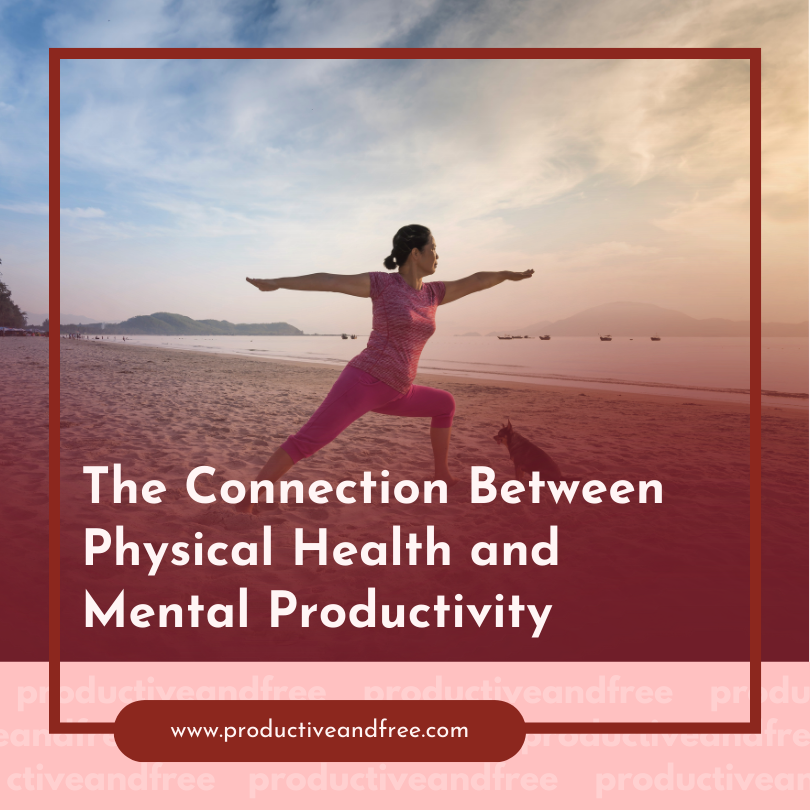
There is nothing like trying to solve a problem when your body feels different. Whether your neck feels locked, your stomach is growling, or your eyes are burning from too many hours of screen time, these factors can quickly turn into distractions affecting our productivity. People act like focus is purely mental. But the body is stubborn, and it doesn’t like to negotiate. Even small things like a shallow breath, tension in the jaw, or a missed walk quietly eat away at thinking.
The brain notices and doesn't comply, even if you want it badly enough to make a difference. That’s because the contention between physical health and mental productivity is real, and it’s not going to stop affecting you if you decide to ignore it.

The Body Always Shows Up First
The brain can’t just ignore the body. Hunger, dehydration, tight shoulders, sore feet, and a range of other discomforts all interrupt thinking in ways that feel emotional but are really biological. People blame procrastination or lack of discipline, but often the body is just sending signals that get mistaken for laziness.
The mind is trying to work, but the body requires care first. This clash can lead to friction because you’re too busy trying to fix the wrong issue. And all of this is frustrating, of course. You feel motivated, you want to do the work, but your body isn’t cooperating, and that’s the gap most advice never talks about.
It might even show up in illnesses over time, and knowing what to put on shingles and other home remedies for specific illnesses isn’t going to help you here. You need to know how to take care of yourself generally instead.
Energy Isn’t Motivation
Sometimes, when we get too desensitized to our own internal processes, we don’t correctly read body cues. When that happens, people rarely can tell the difference between feeling low energy and feeling unmotivated. After all, it looks the same from the outside.
But, those two are entirely different states. Motivation feels like a spark, but energy is fuel. Without it, the spark doesn’t contribute much. When you’re low on energy, motivation can give you a quick boost, but a tired body gets tired even faster when it runs on magic fuel.
That’s why we feel even more sluggish when we start skipping meals, eating sugar-heavy snacks, or relying on coffee for an energy fix. These help in the short term, but all of it messes with focus. People push through, but the stress you put your body through eventually accumulates.

Posture, Alignment, and Mental Fog
Posture is so underrated, and everyone seems to be ignoring it until something happens and your back doesn’t feel the same as before. Not only is it bad for your general health, but it’s also bad for productivity. Sitting slouched compresses the chest and makes breathing shallow. Shoulders then creep up, neck tightens, and jaw stiffens, maybe even becomes subtly misaligned in ways that only show on something like cephalometric x-ray results.
These small things aren’t always obvious. Sometimes you learn about a problem when you least expect it, like when you’re visiting a dentist. Sometimes, issues aren’t even painful at first. And sometimes, especially if you remain slouched for hours, they drain mental stamina. You experience headaches, irritability, and brain fog, and you think you’re tired because you “worked hard,” but these symptoms appear because your own skeleton is working against you.
Movement Resets the Mind
We love to say how we would work out if we had time. And although that’s partially true and often makes sense, it’s more often used as an excuse. That’s because we see working out as something that tires the body instead of keeping it agile. But those who work out tell a different story. The moment you actually start moving your body and giving it the attention it deserves, everything starts to align more.
It doesn’t have to be intense. It doesn’t even always feel productive at the moment. But an hour later, thoughts feel sharper and ideas become easier to string together. Movement anchors the mind back into the present, which is something a lot of productivity guides completely ignore. It’s grounding.
Exercising Outside for More Benefits
One way to get as much benefit from your exercise as possible is to double up and do other things that can help your mental health. Walking, jogging, or cycling outside are great for your mental health.
If you do this, and especially in summer, it's best to be aware of the temperature and your health. As with any other form of exercise, bring plenty of water and, ideally, electrolytes. Wear suitable clothes including a baseball cap to shade your face and eyes from the sun.
Sleep Is Not Optional
Sleep isn’t negotiable. People treat it like a bonus for the highly disciplined, but without it, focus, memory, and creativity suffer. During sleep, the brain is sorting, consolidating, and cleaning the mess. Missed sleep doesn’t just slow thinking, it narrows perspective, and makes decisions impulsive and ideas heavy.
You can grind through the day, but output will always be weaker. And the more you push, the more energy you’re going to need to maintain the same level of focus. Why do that to yourself when the easy route is more pleasant and definitely one of the most important factors in improving your productivity? Sleep is not downtime. It is the pipeline for mental clarity. Skipping is like trying to drive a car with an empty tank.
Stress Lives in the Body First
Stress isn’t only mental. It lives in the body first. You experience elevated heart rate, shallow breaths, and tight muscles as some of the first signs of stress. The brain only notices the anxiety part later.
Chronic stress keeps the nervous system half-on, which makes focusing on anything harder. Trying to reason your way through it doesn’t help much. The body needs to be calm first. Stretching, slow breaths, and moving around works faster than telling yourself to just focus.

Nutrition, Hydration, and Tiny Invisible Drains
The way you fuel your body matters, too. If you primarily eat carbs and drink soda instead of water, the side effects of this diet are inevitable.
Optimal cognitive function, essential for sustained productivity, can be subtly eroded by numerous factors beyond just diet and hydration, including chronic stress and environmental demands that tax neural pathways. Addressing these more intricate physiological requirements often involves exploring targeted biochemical support. For instance, specific peptides are known to influence neurotransmitter systems and neuroplasticity, which are key to maintaining mental sharpness and resilience. Some individuals research options like Semax nasal spray to support cognitive performance and mental acuity, investigating how such approaches might bolster the brain's capacity to handle prolonged focus and complex tasks.
You might feel fine, but your reaction time slows, attention fragments, and ideas feel stickier to pull out. These aren’t dramatic problems, but they accumulate quietly. Productivity isn’t about bursts of effort. It is about sustained capacity, and the body is the infrastructure for that.
Conclusion
Real productivity is messy and human. Stiff shoulders, low energy, disrupted sleep, and tight jaws quietly shape how well the mind works. Paying attention to these things is not indulgence. You need to respect and nourish your body so that the mind functions with less friction. Improve your relationship with your body, and watch how focus improves, creativity flows, and work feels less like a battle against oneself.























Share in the comments below: Questions go here

Transform your sales approach with expert tips on outbound sales. Propel your growing business to new heights with actionable insights and strategies.