
How Can Businesses Help Staff Feel Less Awkward During Sales Conversations
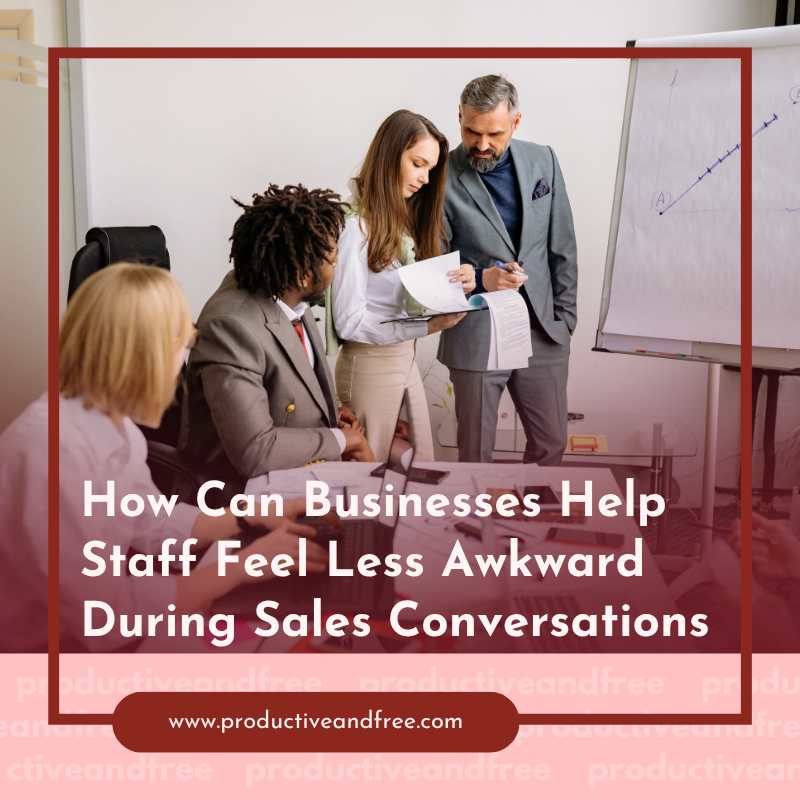
Some employees can be brilliant at the actual job and still get weirdly uncomfortable the second a conversation starts to feel like selling. Like, they know the product, they understand the service. Also, they can answer questions, explain details, and help customers all day long. So in terms of being productive in sales, well, in that aspect, they’re doing just fine.
But then a customer says something like, “That seems expensive,” or “I’m not sure,” well, it gets a bit awkward because then a lot of employees tend to get to the point where they’re rushing, apologizing, over-explaining, or backing away from the conversation altogether.
And yeah, needless to say here, that can be frustrating for a business owner, especially when the employee isn’t doing anything wrong on purpose. Clearly, they’re not lazy; obviously, it’s not like they’re clueless. They’re probably just uncomfortable, and honestly, a lot of people are. Sales conversations can feel awkward because there’s money involved, there’s pressure involved, and nobody wants to sound pushy or fake. But as their employer, what can you do to help them?

Awkward Usually Means they haven’t Practiced Enough
A lot of employees only practice sales conversations when they’re already standing in front of a customer, which is kind of a rough setup if they’re nervous. But this happens a lot, and you can’t blame them if there’s been a lack of sufficient training. But really, here, that’s like asking someone to learn how to swim after dropping them in the deep end and then wondering why they’re tense about it.
They need chances to say the words before the stakes feel real. They need to practice explaining prices without sounding apologetic, answering common questions without rambling and fumbling throughout their sentences, and responding to hesitation without immediately assuming the sale is dead. But seriously, it just can’t be stressed enough here that the more familiar those moments become, the less scary they feel.
They say practice makes perfect, while that's not entirely true, practice at least creates confidence in what they should say and how they should present themselves. You don't want them to freeze mid-conversation, but with the lack of practice, that’s what’s going to happen.
Practice Works Better When it Doesn’t Feel Humiliating
Now, needless to say, roleplay can be useful. At the same time, however, a lot of employees absolutely hate it. It’s like a humiliation ritual to a degree. But really, just put yourself in their shoes, they’re having to stand right in front of a manager pretending to sell something, which can feel painfully awkward, especially for quieter staff who already feel self-conscious.
That’s why practice needs to feel safe, instead of something like a performance review in disguise (because that's what roleplaying basically is). Some employees do better when they can rehearse privately first, make mistakes, repeat the conversation, and build confidence before anyone is watching too closely. Of course, everyone varies, but you could look into DealSpeak as a part of the training because this is a much lower-pressure way to help practice these conversations before having to deal with real people.
What Should they Say in the Messy Middle of the Conversation?
Just keep in mind here that the hardest part of a sales conversation usually isn’t the greeting. Nope, and it’s not the basic explanation either. Maybe that’s clear to you already, but it’s that messy middle part where the customer hesitates. Usually, they do the whole “this company offers this much” as they pull out their phone, or they do the whole “I’ll think about it” like, how are you even supposed to respond to that? Of course, it's awkward!


























Share in the comments below: Questions go here

Transform your sales approach with expert tips on outbound sales. Propel your growing business to new heights with actionable insights and strategies.