
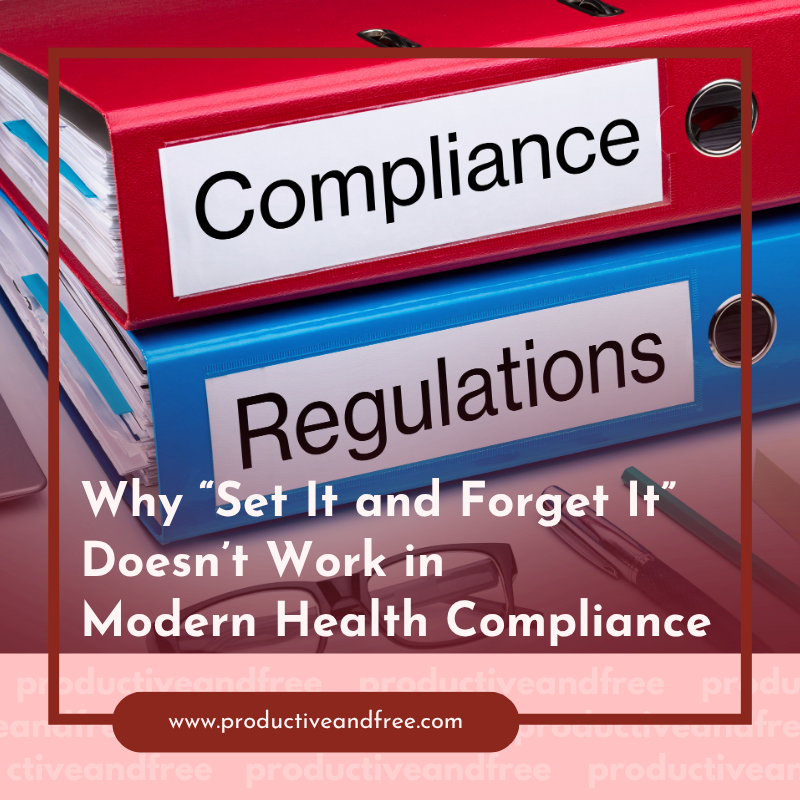
Why “Set It and Forget It” Doesn’t Work in Modern Health Compliance
Compliance Fails When It Stands Still
Health compliance has evolved to be an ever-changing animal. This means there will always be new regulations, changing equipment, expanding or moving record systems, and evolving employee job duties. At some point, a process will look completed when first launched but begin to fail over time due to a lack of review, update, and use in work-related environments. Using a static method for compliance creates issues. The issue is NOT whether a compliance program existed. Issues occur if processes aren’t continuously reviewed, updated, and used by employees under the current working environment.
The Importance of Regular Evaluation of Health and Safety Programs
Most of the time, non-compliance begins with a lack of supervision. Inspection timelines are extended. Documentation is not completed. Products have expired, yet no one has noticed them in inventory. Training manuals are out of date, even though the procedure has changed. Most of these issues occur because most health and safety programs are viewed as static systems; in other words, once implemented, they do not require ongoing management, while continuous monitoring and evaluation are actually crucial. Ongoing review will assist teams in identifying minor failures while still permitting correction before developing into an audit issue or potential safety risk.
Emergency Readiness Raises the Stakes
Ongoing review is particularly vital during emergencies. Programs based on response equipment, along with required checklists, can’t just rely on memory or occasional inspections. In addition to regulatory compliance, the cost of an absent document or missed scheduled inspection could far outweigh that cost. Consistency is needed to maintain readiness. To do so requires clear schedules and assigned owners, as well as a process to monitor and track what’s been checked, what’s overdue, and what will require action next.
Support Exists, but Team Ownership Remains Mandatory
In some cases, companies utilize outside vendors to aid in managing this effort. Services such as premedics systems can support program visibility and help organizations stay on top of recurring compliance tasks. Even so, no provider can replace internal follow-through. Someone still has to review reports, respond to issues, and make sure the program stays active inside daily operations.
Designing and implementing effective quality management requires a clear understanding of regulatory expectations and how they translate into daily procedures. This includes everything from documentation control to audit preparation and continuous improvement cycles. Organizations benefit from a structured approach that ensures every process step aligns with industry standards and internal policies. focus on robust quality systems ensures that these foundational elements are consistently applied and maintained. This involves not only initial setup but also ongoing monitoring and adaptation to evolving guidelines.
Better Compliance Is Built Into Routine Work
The most effective way to improve compliance is through the development of operational best practices. Practical approaches to compliance include building compliance-related activities into your company’s calendar, clearly defining each employee’s responsibilities, and providing periodic refresher training on new process changes. A proactive compliance culture, where employees identify potential issues before they become major concerns, will greatly reduce the stress that comes with being unprepared when a fatal incident does occur.
Giving employees a clear way to raise those concerns is an important part of making that culture work in practice. A whistleblower hotline service provides a confidential channel for reporting suspected misconduct, safety concerns, fraud, or other compliance issues, giving organizations an opportunity to become aware of problems and address them before they escalate.
Improving compliance can save money and time by transforming it from something that is done as part of a reactive “clean up” effort at the end of a project cycle to one that is routinely performed during everyday operations.
Active Management Is the Standard
“Set it and forget it” does not work in modern health compliance because safety programs require attention after setup. Systems drift when no one reviews them. Readiness weakens when routine checks are missed. Strong compliance depends on consistent management, not a one-time effort. Organizations that stay prepared are the ones that keep their programs current, visible, and accountable.








Share in the comments below: Questions go here
Discover essential event planning tips to enhance guest experiences. From logistics to ambiance, create memorable moments that leave a lasting impression.