
7 Business Models that Work Perfectly from a Mobile Setup
Running a business no longer requires a fixed address. Thanks to cloud software, reliable connectivity, and a shift in how clients buy services, a growing number of entrepreneurs are building profitable operations from whatever space they happen to be working from - a co-working spot, a home office in a different city each month, or a vehicle outfitted specifically for work.
The question isn’t whether a mobile setup can support a real business. It’s about which business models are actually built for it.
1. Freelance Consulting and Digital Services
Freelancing is the most established of the mobile business models, and the numbers back that up. According to Upwork's Freelance Forward report, 64 million Americans freelanced in 2023, contributing $1.27 trillion to the U.S. economy - and the trajectory has continued upward since.
For consultants, copywriters, designers, developers, and strategists, the work is almost entirely digital. Email and video calls facilitate client communication, cloud storage enables the sharing of deliverables, and invoicing takes mere seconds. As long as there's a reliable connection, the work carries on regardless of location.
2. Mobile Trades and On-Site Services
Not all mobile businesses are digital-first. Tradespeople and service providers who work directly with clients - electricians, plumbers, landscapers, and mobile mechanics - have been running mobile operations for years. What's changed is how capable that mobile setup can be.
For operators taking their setup seriously, a properly fitted business van conversion can make a significant practical difference. A purpose-built vehicle doubles as a rolling workspace and storage unit, reducing the need for fixed premises while keeping tools organized and accessible on every job.
The model holds up because the value is in the service, not the location. Clients expect you to come to them - which means your vehicle is effectively your office, and it's worth treating it as one.
3. Content Creation and Digital Media
Content creators - whether that means YouTube channels, newsletters, podcasts, or social media accounts built around a topic - run operations that are almost entirely location-independent. Production requires a camera, a microphone, and editing software. The business side runs on brand partnerships, ad revenue, affiliate income, or direct product sales to an audience.
This model rewards operators who can treat their work as a distribution challenge as much as a creative one. Getting content planned, produced, and published consistently is where many creators fall down.
The same logic that applies to product-based businesses holds here: getting the operational side of a small business right matters just as much when the product is content. Inconsistent output is the fastest way to stall audience growth, regardless of how good the individual pieces are.
4. Dropshipping and E-commerce
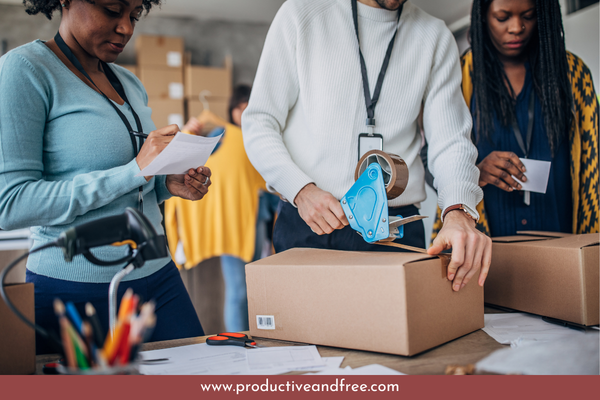
Selling products online without holding inventory is one of the cleanest mobile business models available. With dropshipping, a third-party supplier handles the pick, pack, and ship side of things when a customer places an order. You manage the storefront, the marketing, and the customer experience.
This trend is growing rapidly. Data on location-independent workers puts the global total at over 40 million people in mobile or remote work arrangements as of 2024 - and the tools that support those arrangements have matured alongside the numbers.
E-commerce environments change very quickly, with trends, customer preferences, and supplier conditions shifting almost daily. Building an agile business structure becomes especially relevant here, since e-commerce operations depend on fast decision-making across supplier relationships, ad spend, and inventory shifts. Operators who can move quickly when a product stops performing or when a supplier adjusts their conditions tend to outlast those who can't.
Margins can be tight, so the focus tends to fall on finding categories with less price competition or building a branded experience that commands a premium over generic alternatives.
5. Online Coaching and Course Creation
If the expertise is there, packaging it into coaching sessions or online courses is one of the more scalable things a person can do from a mobile setup. Delivery is entirely digital: live calls through Zoom or similar platforms, course content hosted on platforms like Teachable or Kajabi, and transactions handled automatically.
What makes this model particularly well-suited to mobile work is the asynchronous element. A course, once built, generates revenue without requiring you to be present for every transaction. Coaching calls can be scheduled across time zones to fit wherever you happen to be working from.
Building credibility and an audience takes time, but once a clear niche is established, the model compounds in a way that most pure service businesses don't.
6. Virtual Assistance and Remote Admin
Virtual assistants provide administrative, organizational, or specialist support to business owners who need assistance without hiring a full-time employee. Typical tasks include inbox management, calendar coordination, research, data entry, and customer communication.
The model has low overhead by design - no physical product, no inventory, no premises required - and the work can be done from anywhere with a stable internet connection. Experienced VAs often specialize in a specific niche or platform, which lets them charge higher rates than generalists:
Executive and calendar management
Social media scheduling and reporting
E-commerce order management
Podcast or video production support
CRM and data entry
Client relationships in this model tend to be sticky. Business owners who rely on a VA for day-to-day operations are reluctant to switch unless something goes wrong - which makes retention relatively strong once the working relationship is established.
7. Photography and Videography
Visual content is in constant demand. Businesses need product shots, event coverage, brand imagery, and video on an ongoing basis. Photographers and videographers willing to travel to clients can build solid businesses from a mobile base.
Equipment is the main upfront investment. Beyond that, the model is straightforward: client brief, shoot, deliver. Post-production can happen from anywhere with a capable laptop and the right software.
Remote and flexible work is becoming more common across many industries. Global research on mobile and location-independent work consistently shows that these work patterns now extend well beyond tech and knowledge work - creative fields are firmly part of the picture. Specializing in a segment such as corporate events, real estate, product photography, or a specific industry tends to accelerate growth more than trying to cover every category at once.
What connects all seven of these models is a low dependency on a fixed physical space. The work can be set up, delivered, and scaled without a lease, a warehouse, or a permanent team on-site. That doesn't mean they're easy - each one requires real skill, consistent effort, and decent systems behind it - but the barrier to building a mobile version of any of them is lower than it's ever been. Start with the model that fits your existing skills and the market you understand best. The logistics tend to follow from there.












Share in the comments below: Questions go here
Transform your sales approach with expert tips on outbound sales. Propel your growing business to new heights with actionable insights and strategies.